Arturia MicroFreak – a weird little synth with a keyboard you can't press
As an Amazon Associate I earn from qualifying purchases. It costs you nothing extra.
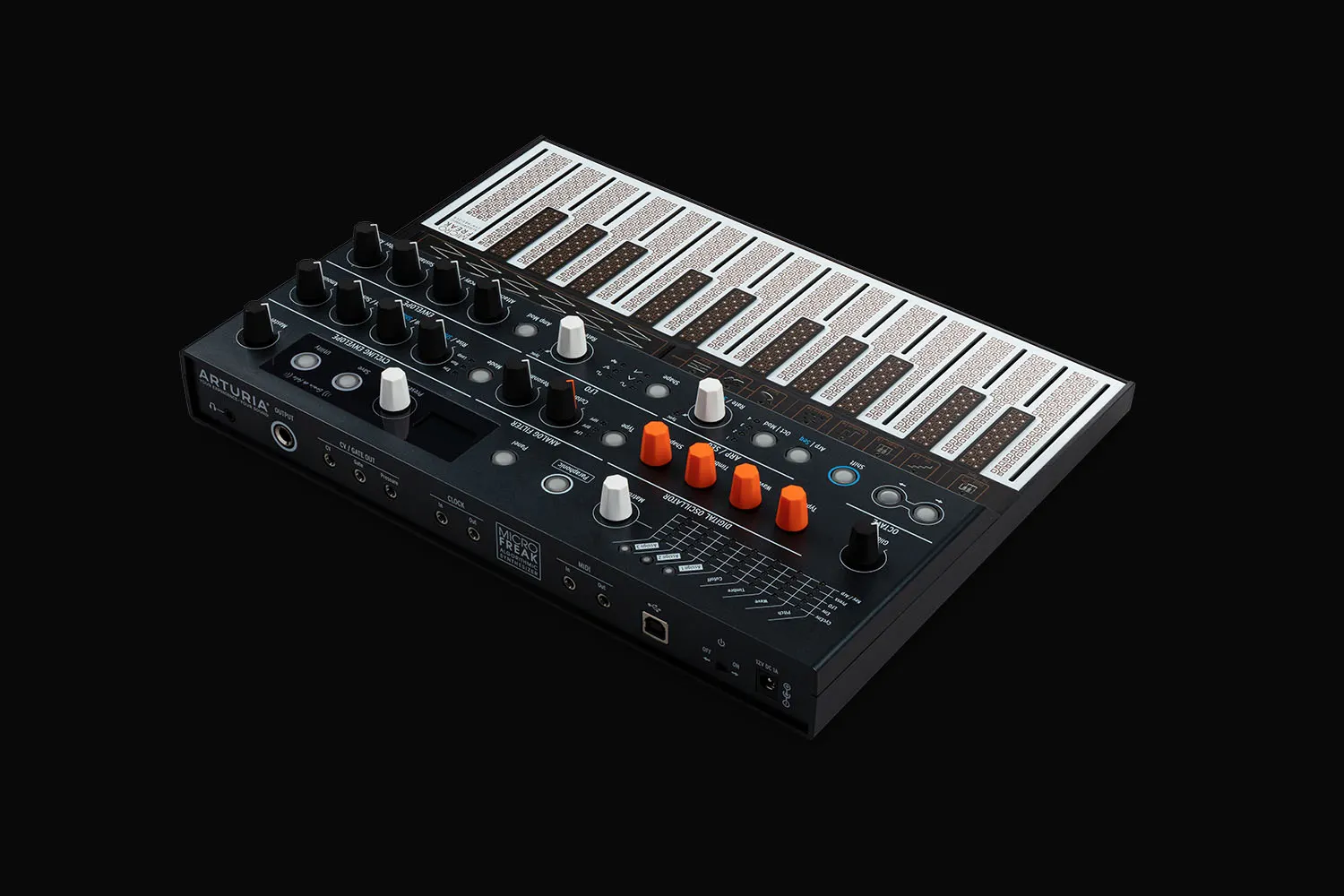
Most synthesizers want you to be a keyboard player. Proper keys, proper technique, proper scales. Plenty of us can play about four chords, and one of them is wrong.
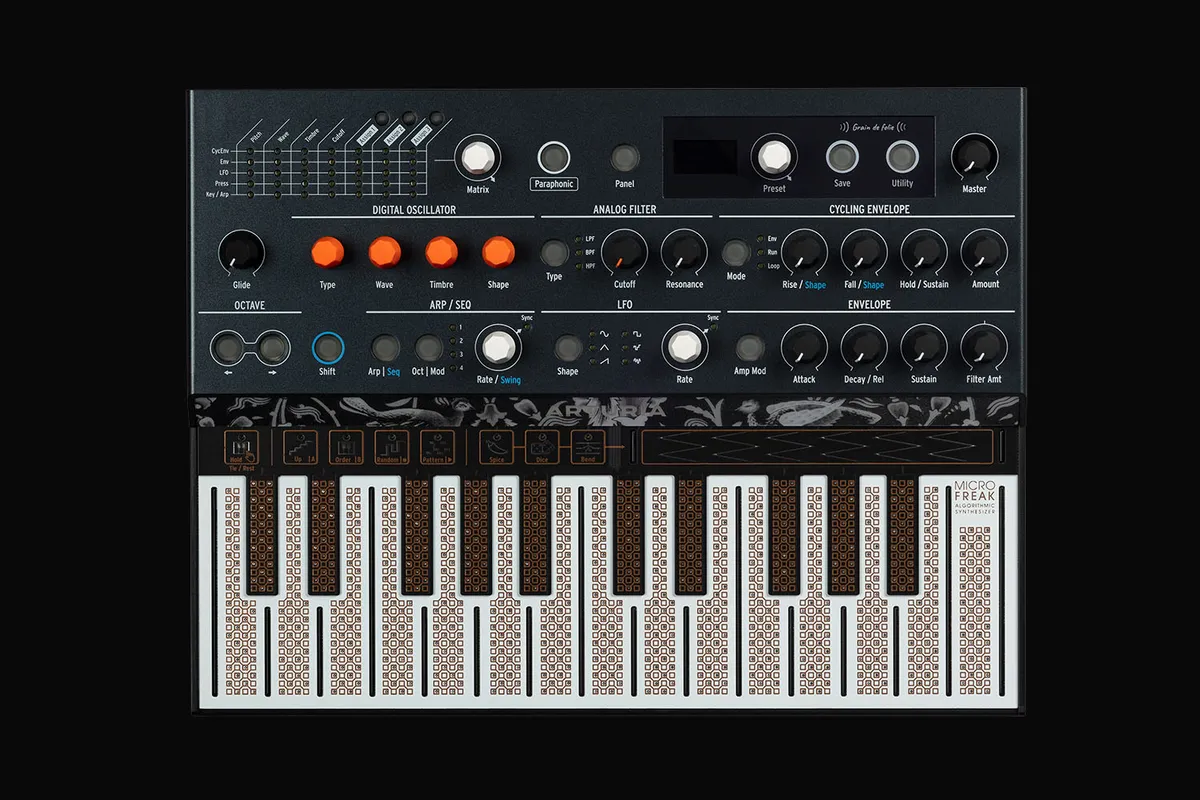
The Arturia MicroFreak doesn’t care. It’s a small hybrid synthesizer with a completely flat keyboard printed on a circuit board, a digital sound engine full of strange modes and an analog filter. There’s even a button called Dice that randomizes your melody for you.
It’s been around since 2019, and Arturia keeps adding features with free updates. That’s why it still shows up on “best synth” lists today.
What is the Arturia MicroFreak?
Arturia is a French company, founded in 1999 and best known for its software versions of vintage synths. The MicroFreak is its experimental hardware synth: Arturia’s own description is “a synthesizer like no other”, and it costs a lot less than most “serious” synths.
It’s about the size of a 13-inch laptop (12.2 by 9.2 inches) and weighs 2.3 pounds, according to the Amazon listing. Small enough for a backpack. You can even power it over USB.
How does it work?
Every sound starts in the digital oscillator. Arturia’s spec sheet now lists 21 oscillator modes, from classic wavetables to sample playback and granular sounds, plus engines from Mutable Instruments and Noise Engineering and a vocoder mode. Firmware updates added several of these after launch, so early owners got a whole new synth for free.
That digital sound then goes through an analog filter inspired by the Oberheim SEM, which can make it scream or whisper.
The keyboard is the weird bit. It’s 25 flat, touch-sensitive “keys” with no moving parts. Each key senses how hard you press, separately. Arturia calls that polyphonic aftertouch, a feature you normally find on much more expensive instruments. Push harder on one note and only that note changes.
Then there’s the sequencer. Program a pattern, and the Spice and Dice buttons shuffle and mutate it into something you’d never come up with yourself. Happy accidents, on demand.
The good and the not-so-good
What I like:
- So many sounds for the money. MusicRadar praised its “weird and wacky oscillator modes” and how easy it is to program.
- The flat keyboard is a conversation piece, and Arturia says it tracks fast playing better than normal keys.
- Free firmware updates that keep adding real features.
- Plenty of ins and outs (USB, MIDI and CV) to hook it up to a computer or other gear later.
What could be better:
- No built-in effects like reverb or delay. Several Amazon buyers mention this, and most add an effects pedal.
- MusicTech’s reviewer found the plastic case and keybed a tad flimsy.
- The flat keys are an acquired taste. Watch a video first.
- There’s no USB cable in the box, according to early buyers. You’ll want one for firmware updates.
Who is the Arturia MicroFreak for?
Curious musicians who like to tweak knobs more than practice scales. Bedroom producers who want one hardware synth with a lot of variety. And anyone who has played with apps and wants their first “real” synth without spending a month’s rent.
If they want a whole groovebox with drums instead, look at the Yamaha SEQTRAK. If they’d rather mangle sound with their hands, there’s the Korg NTS-3 kaoss pad. And for more ideas, see our list of music gadgets for musicians.
Where can I buy the Arturia MicroFreak?
Arturia sells the MicroFreak through its own Amazon store. At the time of writing (October 2026) it was about 350 bucks. There’s also a Vocoder Edition that bundles a microphone, for a bit more.
A synth with a dice button. Roll it and see what happens.