M-VAVE FM-1 – the $70 Pocket Synth the Internet Turned Into 200 Instruments
As an Amazon Associate I earn from qualifying purchases. It costs you nothing extra.
In 1983 the Yamaha DX7 cost about two thousand dollars, and programming it felt like doing your taxes. In 2026 M-VAVE put the same kind of sound engine in a box the size of a Game Boy, added a battery and a speaker, and asked about 70 bucks for it.
That box is the M-VAVE FM-1, a pocket FM synthesizer with six operators, 128 presets and 27 squishy silicone keys. That alone would make it a good deal. But the reason the whole synth world is talking about it is what happened next. Within four months of launch, hobbyists cracked it open and wrote more than 200 alternative firmwares for it, almost all of them free. Drum machines. Grooveboxes. A Juno-106. A Minimoog. A Game Boy emulator. Doom.
I’ve seen a lot of synth hype. I’ve never seen a cheap synth turn into a hobby of its own this fast.
What is the M-VAVE FM-1?
The FM-1 is a small, battery-powered FM synthesizer. FM stands for frequency modulation. Most synths take a buzzy waveform and filter it. An FM synth makes simple sine waves wobble each other’s pitch very fast, which creates new tones. That’s the trick behind the glassy electric pianos, bells and slap basses all over 1980s pop.
M-VAVE is the music brand of Cuvave, which has made budget wireless MIDI gear and tiny gadgets for musicians since 2018. The FM-1 came out in June 2026.
According to M-VAVE’s spec sheet, it has:
- Six operators and 32 algorithms, the same layout as the DX7
- 128 factory presets, plus import of standard DX7 SysEx patch banks
- Up to 12 voices of polyphony
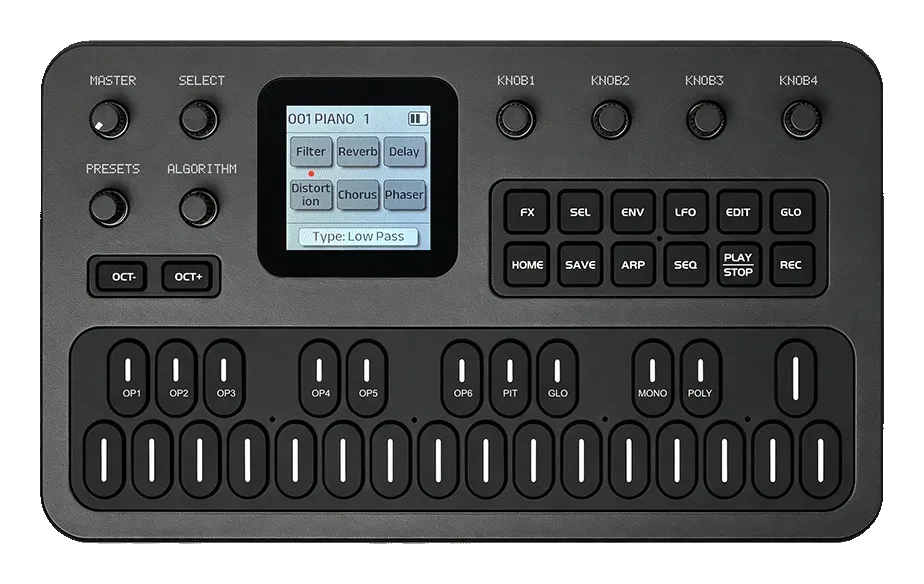
- A 27-key silicone keyboard with octave buttons, a color screen and eight knobs
- Six effects: filter, reverb, delay, distortion, chorus and phaser
- An arpeggiator with 7 modes and a 16-step sequencer
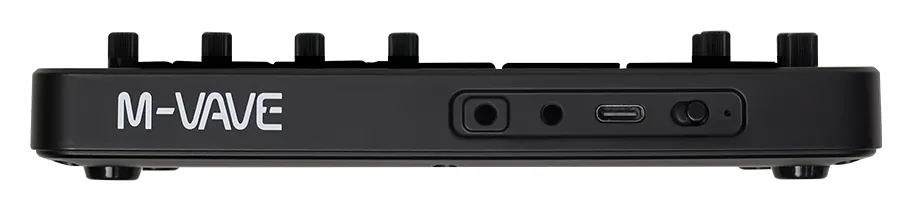
- USB-C MIDI, Bluetooth MIDI and a 3.5 mm TRS MIDI input, all usable at the same time
- A 2000 mAh battery (about 12 hours), a built-in speaker and a headphone output
- A size of 161.5 × 96.5 × 28.6 mm (about 6.4 × 3.8 × 1.1 inches) and a weight of about 251 grams
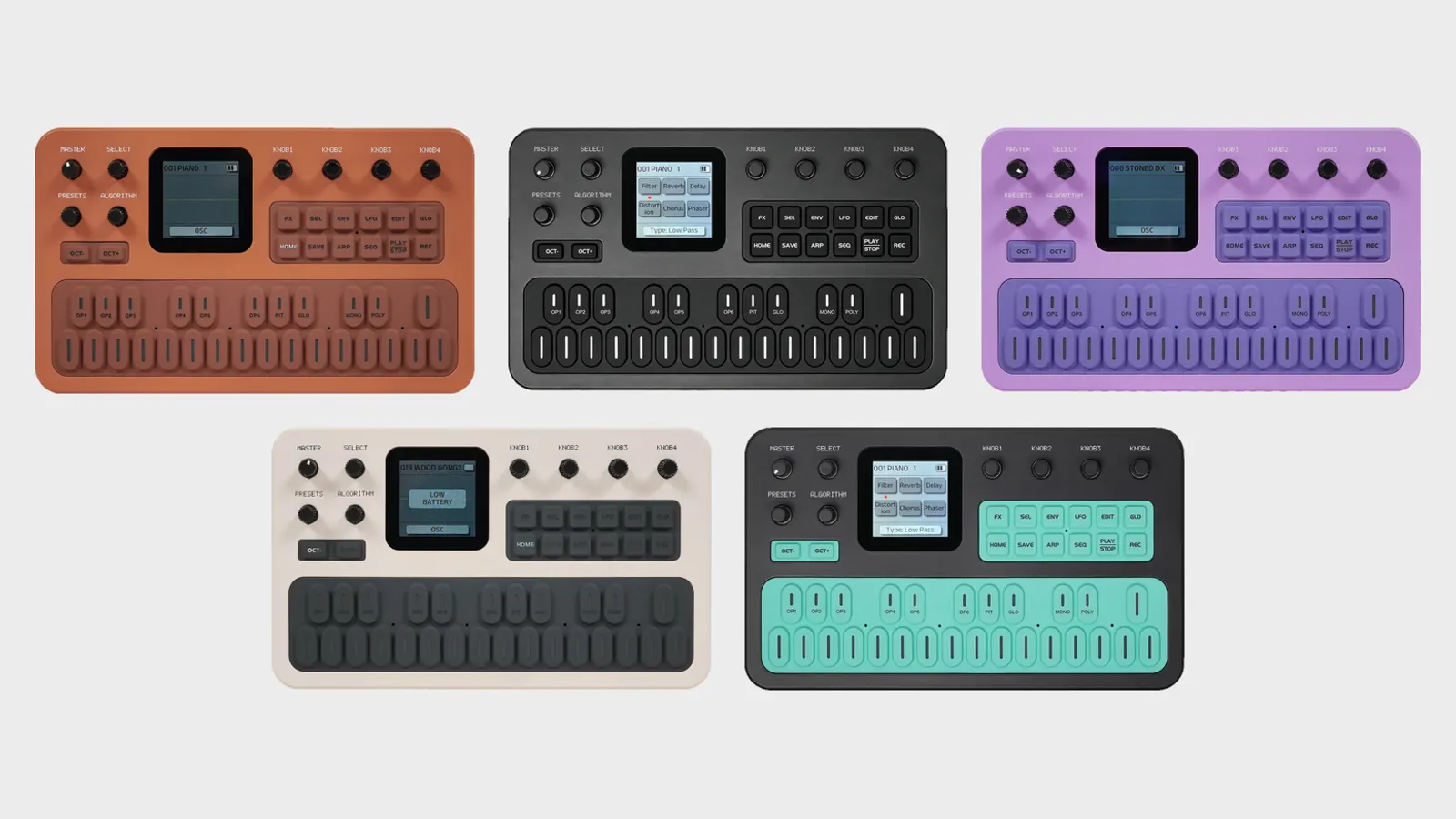
M-VAVE sells it in black, orange, purple, cool gray and black with mint keys. The screen is the clever bit for beginners: turn the Algorithm knob and it draws how the six operators are wired together. That makes FM something you can see.
Because it reads DX7 patches, you also get forty years of free sounds. Every classic DX7 bank on the internet is fair game.
How did a $70 synth get 200 firmwares?
This is the part that makes the FM-1 special, so bear with me.
Inside is a cheap JieLi AC791N chip, the kind of chip you normally find in budget audio gadgets. According to a reverse-engineering project on GitHub (AL-255/FM-1-RE), the stock sound engine is derived from Dexed, the free and open source DX7 emulator. Dexed in turn grew out of an FM engine that Raph Levien wrote in 2012 for an Android synth project. He turned up in the Hacker News thread about the FM-1 to talk about it.
Open source roots and a USB update protocol are catnip for nerds with a free weekend. Then it snowballed:
- Late September 2026: a developer called Baud Girl released FM-1+VA, the first third-party firmware. It added a virtual analog engine and a 64-step sequencer, and it installs from a web page in Chrome or Edge over the USB cable.
- Early October: Leo Kuroshita of Hügelton Instruments released Felucca, an open source firmware that turns the FM-1 into a multi-engine synth. Version 1.0 has 13 engines, from FM and virtual analog to physical models borrowed from Mutable Instruments’ open source code, plus a piano roll and a song mode. Dozens of other firmwares started as a copy of Felucca.
- October 7: the AL-255 reverse-engineering write-up of the stock firmware hit the Hacker News front page.
- Mid-October: M-VAVE did the smart thing and joined the party. It put its own open firmware, FM1 Open, on GitHub (the app code is GPLv3), with an SDK and a browser workbench. It turns the FM-1 into an eight-track groovebox with DX7, 303, 808, chiptune and sampler engines.
- October 21: M-VAVE also updated the regular firmware to V16. According to the community’s firmware list, that version makes the FM-1 eight-part multitimbral (eight sounds at once), with 20-note polyphony and 64-step patterns.
The community list on GitHub, awesome-fm-1, counts over 200 open source synth firmwares alone at the time of writing. A few favorites, just to show how wild it gets:
- SLOOP and X0X: grooveboxes, the second one with 808, 909 and 303 models in the style of the old ReBirth software
- FM-106, FMini-1 and OberVave: a Juno-106, a Minimoog Model D and an analog-style polysynth
- FoMni and ChoralRoot: chord instruments in the spirit of the Omnichord and the Orchid
- AMB-1: a self-playing generative ambient machine
- FM-1 SID: a Commodore 64 sound chip that plays real C64 game tunes
- GameDude, fm1-nes and several ports of Doom: because of course
- fm1-dock: holds several synths at once, so you can switch without reflashing
- Fart Machine One: I’m not explaining this one. Someone forked it into Cat Piano, where every key meows.
You can try many of them in your browser before you flash anything, thanks to community emulators. One Synth Anatomy reader called buying a second FM-1 just for experiments “completely reasonable”. At this price, I agree.
Here’s Tonepusher trying to explain the obsession:
Is custom firmware on the FM-1 risky?
A bit. The FM-1 has a single bank of flash memory, and nobody has shown a safe recovery mode yet. An update that dies halfway (pulled cable, laptop goes to sleep) can soft-brick it. The community has since built several unbricking tools, and M-VAVE’s own updater can put the stock firmware back. Still, some firmwares warn that they erase your saved projects and samples, and plenty are labeled beta or “not yet tested on hardware”. One Hacker News commenter pointed out that many of them are “vibecoded” with AI tools.
So back up first, keep the battery charged, and start with the big names: FM1 Open, Felucca, SLOOP or X0X.
The good and the not-so-good
What I like:
- Real six-operator FM with DX7 patch support, for the price of a nice dinner.
- Battery, speaker and Bluetooth MIDI make it a true couch synth.
- The screen shows the algorithm, so you can learn FM on it.
- Over 200 free firmwares, and a maker that cheers them on.
- The purple and orange versions are great for anyone who already owns a black synth (everyone owns a black synth).
What could be better:
- It doesn’t sound exactly like a real DX7. Synth Anatomy’s reviewer says the original sounds better, and calls the FM-1 “a fun little synth that is surprisingly convincing”.
- The silicone keys are tiny. For real playing, plug in a MIDI keyboard.
- On the original firmware, the stereo output carries a mono signal and the sequencer is a basic 16 steps.
- There’s no USB cable and no TRS MIDI adapter in the box. M-VAVE lists only the synth and a manual.
- Custom firmware is a rabbit hole. You will lose evenings to it.
Who is the M-VAVE FM-1 for?
Anyone who has wanted to understand FM synthesis without hunting down a vintage DX7 and a box of manuals. Bedroom producers who want 80s keys and bells on the couch. Tinkerers and programmers who like a synth that can become a new instrument every weekend. And it’s a great gift for the musician who has everything, because they probably don’t have this one yet.
If you want a more serious synth with deeper sound design, the Arturia MicroFreak is the next step up. If you want a groovebox that works out of the box, without any flashing, look at the Yamaha SEQTRAK. And for more ideas, see our most fun gifts for musicians.
Where can I buy the M-VAVE FM-1?
M-VAVE sells the FM-1 on AliExpress and Amazon. AliExpress is usually cheapest: Synth Anatomy saw it there for about 60 to 80 bucks, depending on coupons. On Amazon in the US it was about 80 bucks at the time of writing (October 2026), and it sat at number one in Amazon’s tabletop synthesizer best sellers. The Amazon link below goes to the black one. The same listing also has other colors.
A DX7 in your pocket that can also run Doom. Take my money.