Akai MPC Sample – a vintage-style beat machine that runs on a battery
As an Amazon Associate I earn from qualifying purchases. It costs you nothing extra.
Step one: see a photo of an Akai MPC in some legendary hip-hop studio. Step two: look up the price of a big MPC. Step three: quietly close the tab.
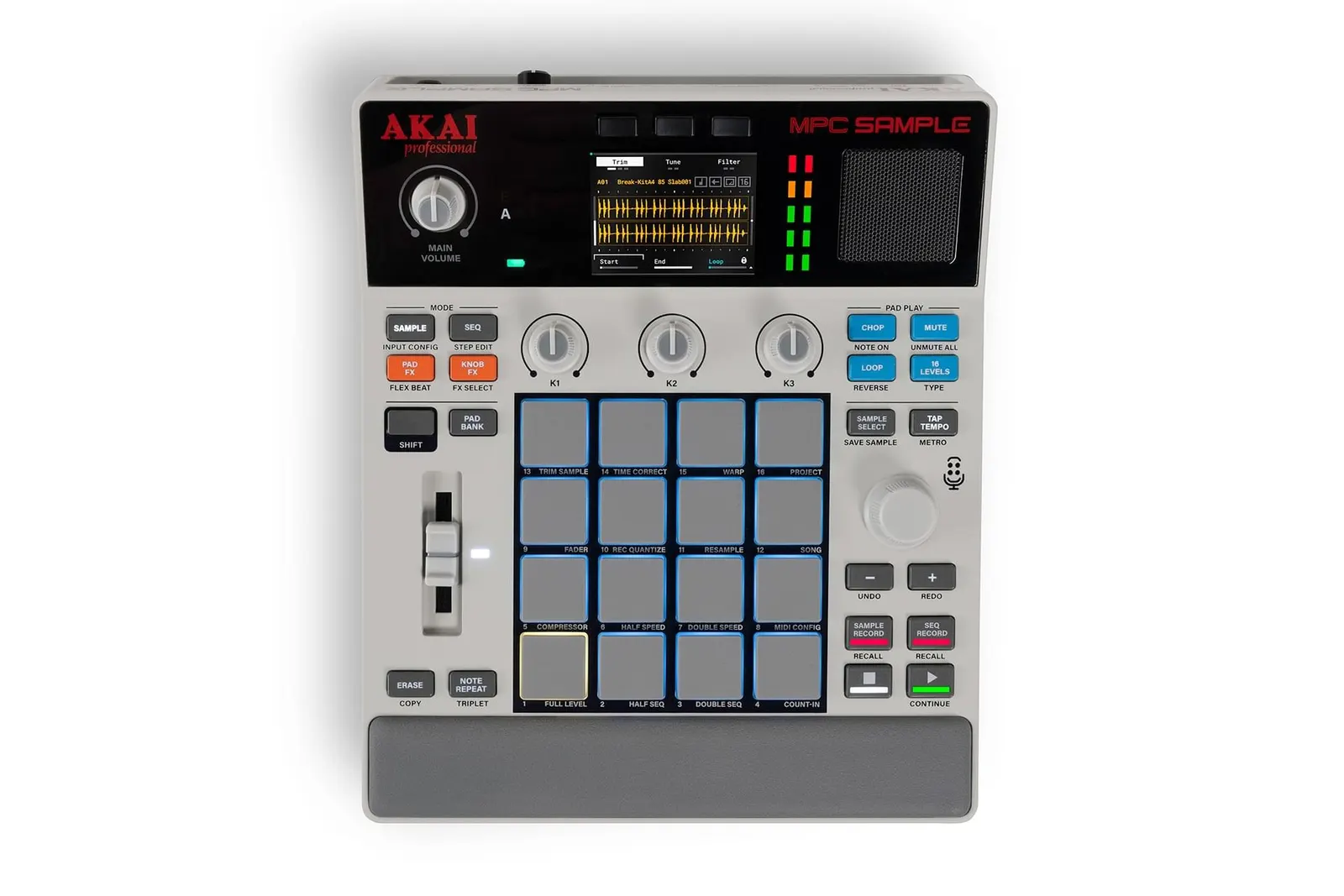
The Akai MPC Sample is Akai’s answer to that closed tab. It’s a portable sampler with 16 MPC pads, a built-in mic, a speaker and a battery, so you can chop and play beats on the couch without a computer. It costs a fraction of the big MPCs.
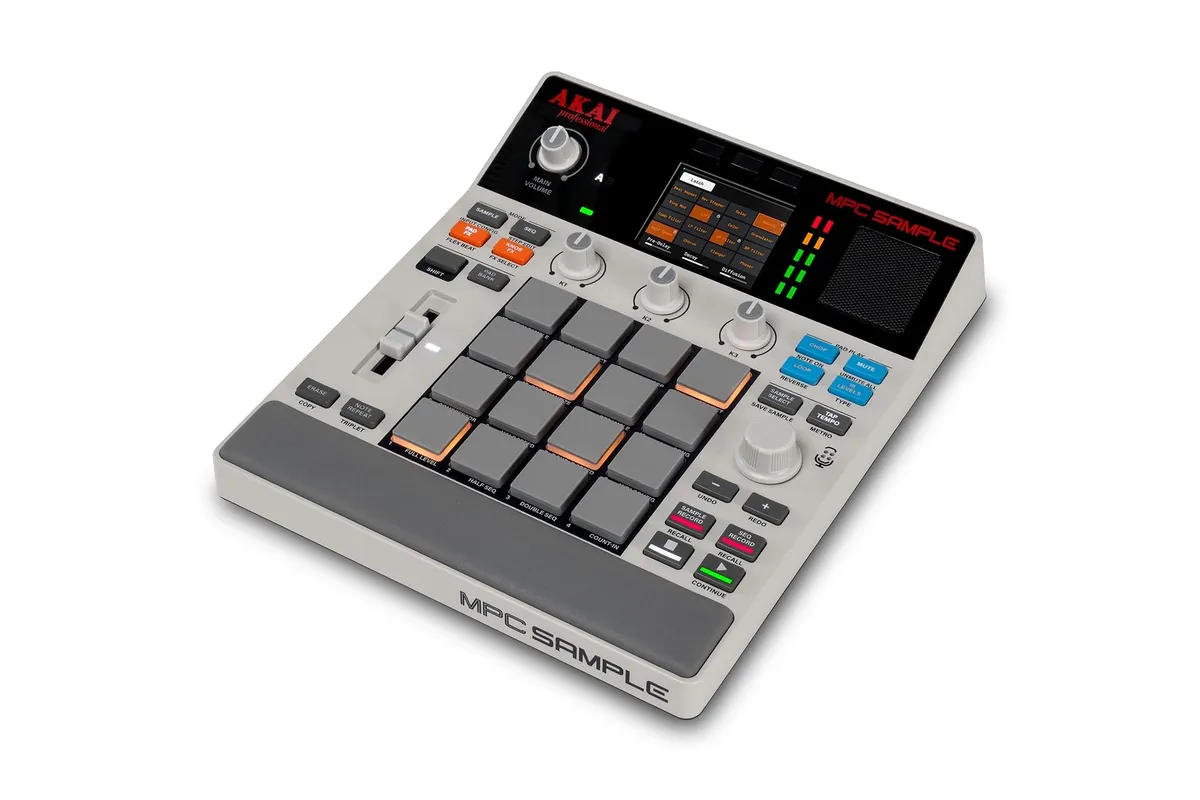
And it looks like an old MPC60 that got shrunk in the wash. I’m into it.
What is the Akai MPC Sample?
Akai Professional launched the MPC Sample on March 24, 2026 for $399, and it was available the same day. Akai calls it its most accessible standalone sampler yet. Engadget pointed out that the bigger MPC XL costs close to $3,000, so this is the cheap seat into the MPC club.
The design borrows from the classic MPC60. Inside, it’s modern: a 2.4-inch color screen for waveform editing, 8GB of storage plus a microSD slot, 2GB of RAM and 32 stereo voices.
How does it work?
You record a sound (through the built-in mic, the 1/4-inch inputs or USB-C from your phone or laptop), drop it on a pad, chop it up and play it. Then you build a beat with the MPC sequencer and its famous swing. That’s the whole idea, and the whole fun.
What’s in the box, on paper:
- 16 RGB-lit, velocity-sensitive MPC pads with aftertouch
- Over 100 factory kits to start with
- An instant chop mode, time-stretch and repitch
- Four effects engines with 60 effect types, including vinyl and tape emulations
- A rechargeable battery that Akai rates at about five hours
- A 3-watt speaker, headphone out, MIDI in/out, sync out and USB-C audio
- 60 finger drumming lessons from Melodics
Projects open in Akai’s MPC software later, if you want to finish a track on a bigger screen.
The good and the not-so-good
The reviews are good. MusicRadar called it the closest thing Akai has released to a vintage MPC in decades. MusicTech gave it 8 out of 10 and said the pads are a joy to play, with little menu-diving. The reviewer even picked it over the other portable samplers they compared.
Now the catches. MusicTech found the time-stretching basic and sometimes bad-sounding, and you can’t put effects on individual sounds or export stems to a DAW. Engadget called the speaker weak, so plan on headphones. It also sold out at launch, so stock can come and go.
Who is the Akai MPC Sample for?
It’s for the person who makes beats on a laptop and secretly wants buttons. It’s also a great first hardware sampler for someone who grew up on hip-hop and always wanted to know how those records were made. The pads and the swing are the point.
Skip it if you want a full studio in a box. The big MPCs do more, and they cost a lot more. If you want something smaller and weirder, the Teenage Engineering EP-40 Riddim is a pocket sampler with a dub siren, and the Yamaha SEQTRAK packs a whole groovebox into something the size of a pencil case.
Where can I buy the Akai MPC Sample?
Amazon sells it through Akai’s own store. It was about 400 bucks at the time of writing (October 2026), the same as launch price. For more music toys, see our favorite music-making gadgets.
If the beatmaker on your list owns a laptop and a dream, this is the gift. Take my money!