Philips Hue Twilight – a wake-up light that fakes a sunrise on your wall
As an Amazon Associate I earn from qualifying purchases. It costs you nothing extra.
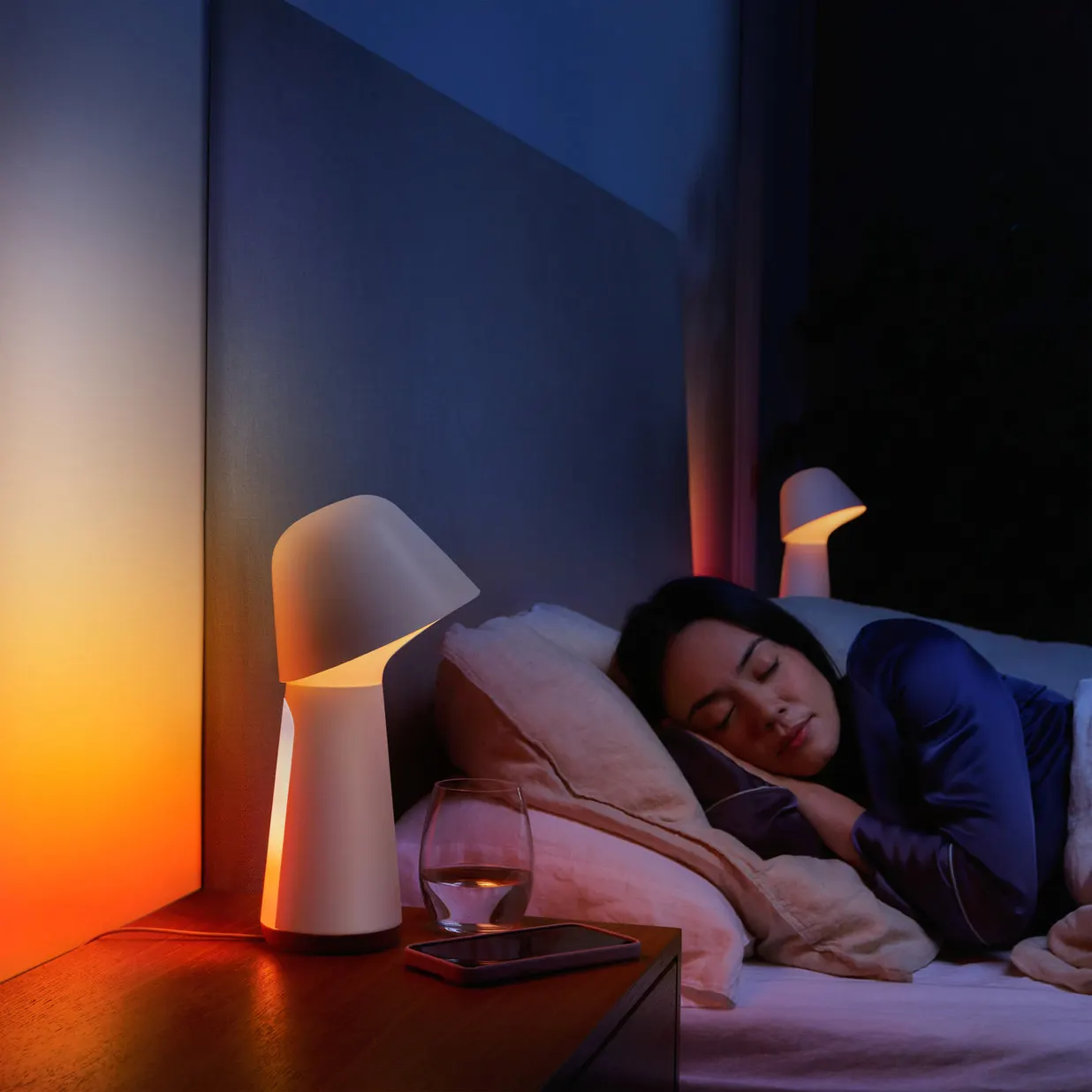
In winter the sun in the Netherlands doesn’t bother showing up until well after eight. My alarm doesn’t care. It goes off in the dark, I squint at my phone, and my body files a formal complaint.
The Philips Hue Twilight is a bedside wake-up light. Before your alarm, it slowly paints a sunrise on the wall behind your nightstand. At night it does the opposite and fades to warm red.
A lamp that lies to my brain about the time of day? Yes please.
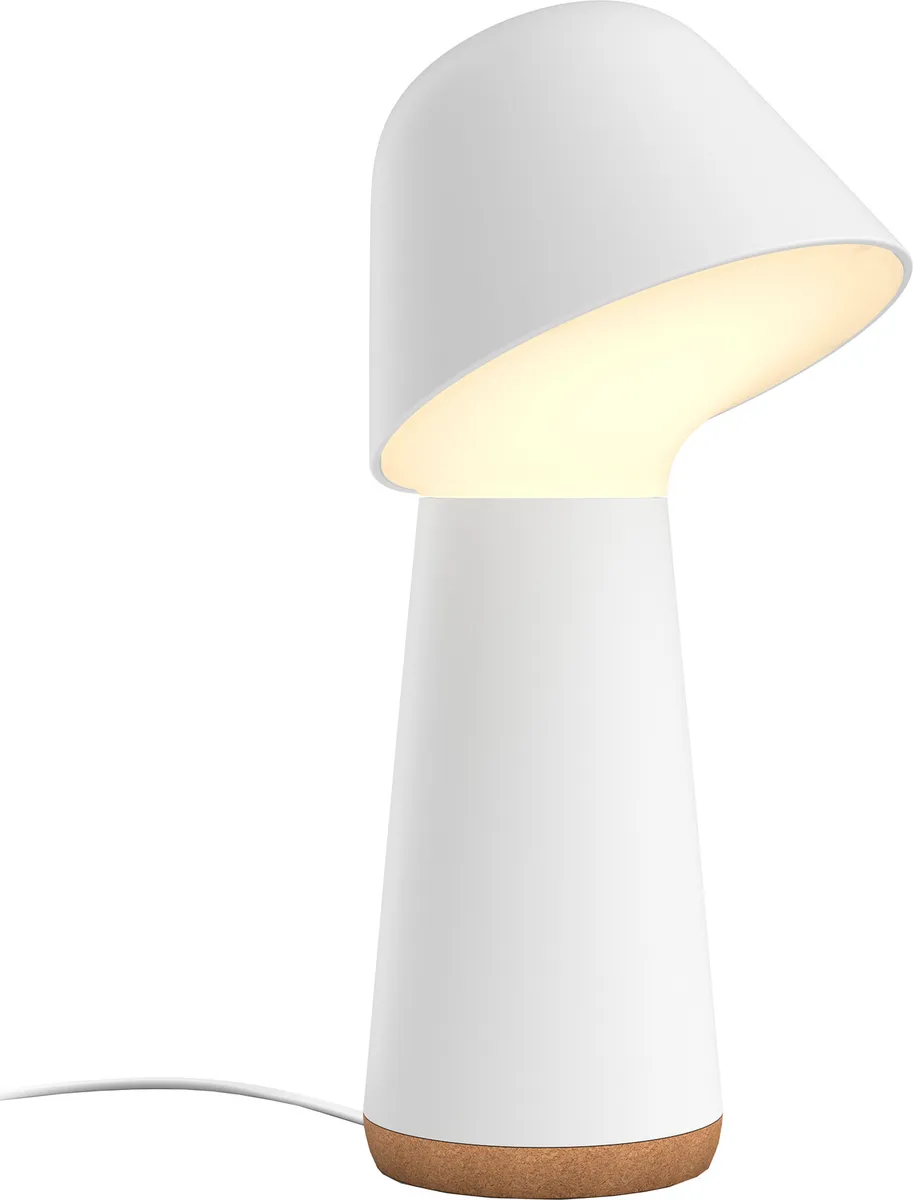
What is the Philips Hue Twilight?
It’s a 13-inch table lamp shaped a bit like a mushroom, in white or black, on a cork base. Inside are two separate lights. The head is a reading light that swivels left and right. The back has what Hue calls ColorCast: overlapping LEDs that throw a color gradient up the wall. Hue’s spec sheet lists 1,380 lumens, so it also works as a regular bright lamp.
There are two buttons on top. One cycles through six scenes made for the Twilight. The other starts a Go to sleep routine with one press.
How does the wake-up light work?
You set a wake-up time in the Hue app. Before that time, the Twilight starts at a very dim glow and slowly brightens through dawn colors, so the room is already light when your alarm goes off. Hue says it dims lower than many other lamps, so it also works as a nightlight.
At bedtime the scenes go the other way: warm, reddish light without blue light, which Hue points out is the part of the spectrum that suppresses melatonin. Press the button, the light fades out, you sleep. In theory.
It talks Bluetooth and Zigbee and works with Alexa, Google Home, Apple Home and Matter.
The good and the not-so-good
The good:
- Josephine Watson at TechRadar called it Philips Hue’s first true wake-up lamp and said it “nails the landing”. TechRadar later called it the best wake-up light they’ve tested.
- Two lights in one: the wall glow for sunrise and mood, the swiveling head for reading.
- It looks like a lamp you’d choose, not a medical device.
The not-so-good:
- The Hue Bridge catch. The Amazon listing says you need a Hue Bridge (sold separately) for the wake-up and go-to-sleep automations. Those are the main reason to buy this lamp. No Bridge yet? Add that to the price.
- It’s pricey, even for Hue. TechRadar also wasn’t thrilled by the plastic build at this price, or by the large power supply.
- There’s no speaker. No birdsong, no white noise, no alarm sound. It’s light only.
- Amazon buyers are less excited than the critics: 3.8 out of 5 from 75 ratings at the time of writing.
Who is the Philips Hue Twilight for?
People who already have Hue lights and a Bridge. For them it’s an easy add that slots into the app they know. It’s also a good pick for anyone whose winter mornings are pitch dark and who hates being yanked awake by a phone.
If you don’t own any Hue gear, the Bridge makes this an expensive first step. A wake-up light with sound built in, like the Hatch Restore 3 in our sleep gadgets roundup, is the simpler route. And if you mostly want a lamp that looks cool on the wall, Nanoleaf’s light panels do the color show without the bedtime routine.
Where can I buy the Philips Hue Twilight?
Amazon US sells it in white (below) and black. It was about 260 bucks at the time of writing (October 2026), on sale from the usual price of around 308.
A fake sunrise for a real morning. Sounds like a fair deal to me.