The 8 Best Ebike Conversion Kits for 2026
As an Amazon Associate I earn from qualifying purchases. It costs you nothing extra.
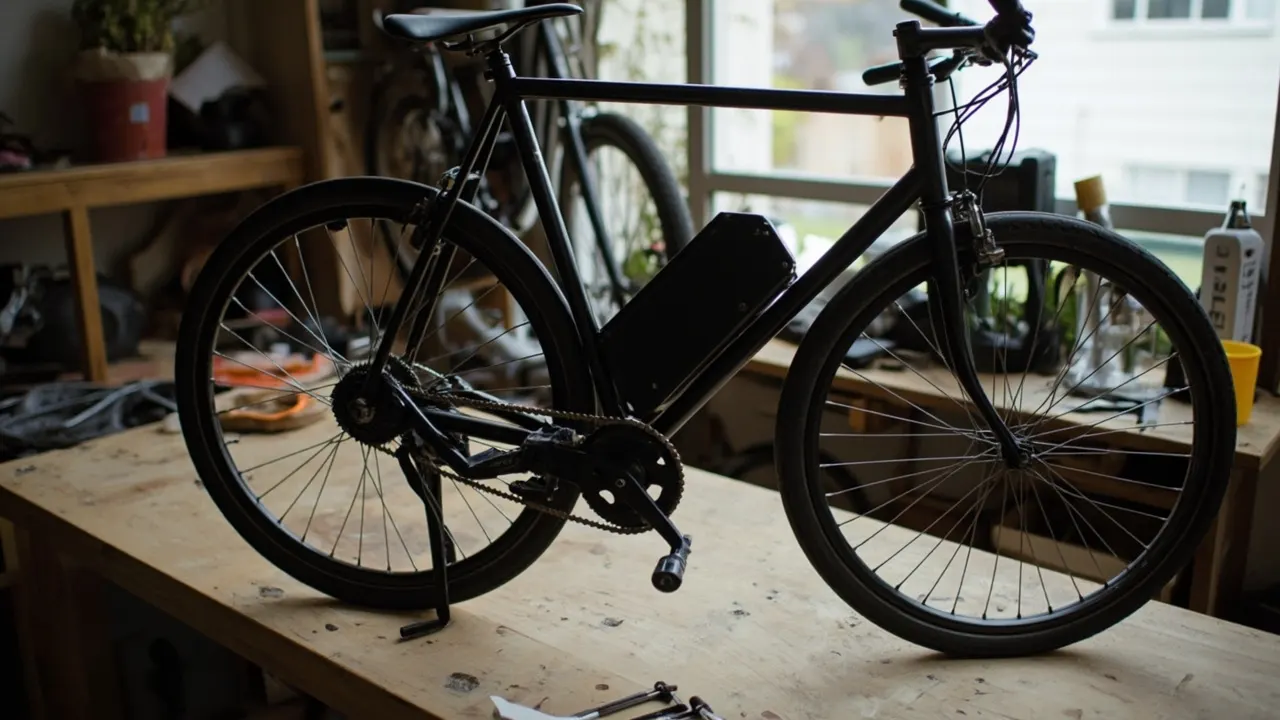
A new e-bike costs a lot of money, and you probably already own a bike you like. An ebike conversion kit adds a motor and a battery to that bike, so you keep the frame, the saddle and the riding position you’re used to, and get help on the hills.
As a Dutchman I have a personal interest here. In the Netherlands we have more bikes than people, and a few of mine (a fixed gear and a proper grandma bike) are collecting dust in the shed. Pimping the bike you’re already comfortable on beats getting used to yet another new one.
The kits below are sold in 2026. I haven’t bolted all of them onto my own bikes, so this list is based on the makers’ specs and on hands-on reviews from Cycling Weekly, Cyclingnews and Electroheads. One kit from the old version of this post is out: I couldn’t find a way to order the Unlimited kit from Barcelona anymore. The Bafang and the Lightest are still here, and five newcomers joined them.
Quick picks
- Best overall mid-drive: CYC Photon 2
- Best value mid-drive: Tongsheng TSDZ2B
- Lightest: Lightest by Bikee Bike
- Easiest to install: LIVALL PikaBoost 2
- Cheapest way to go electric: Voilamart rear wheel kit
Bafang BBS02B – the classic mid-drive for tinkerers
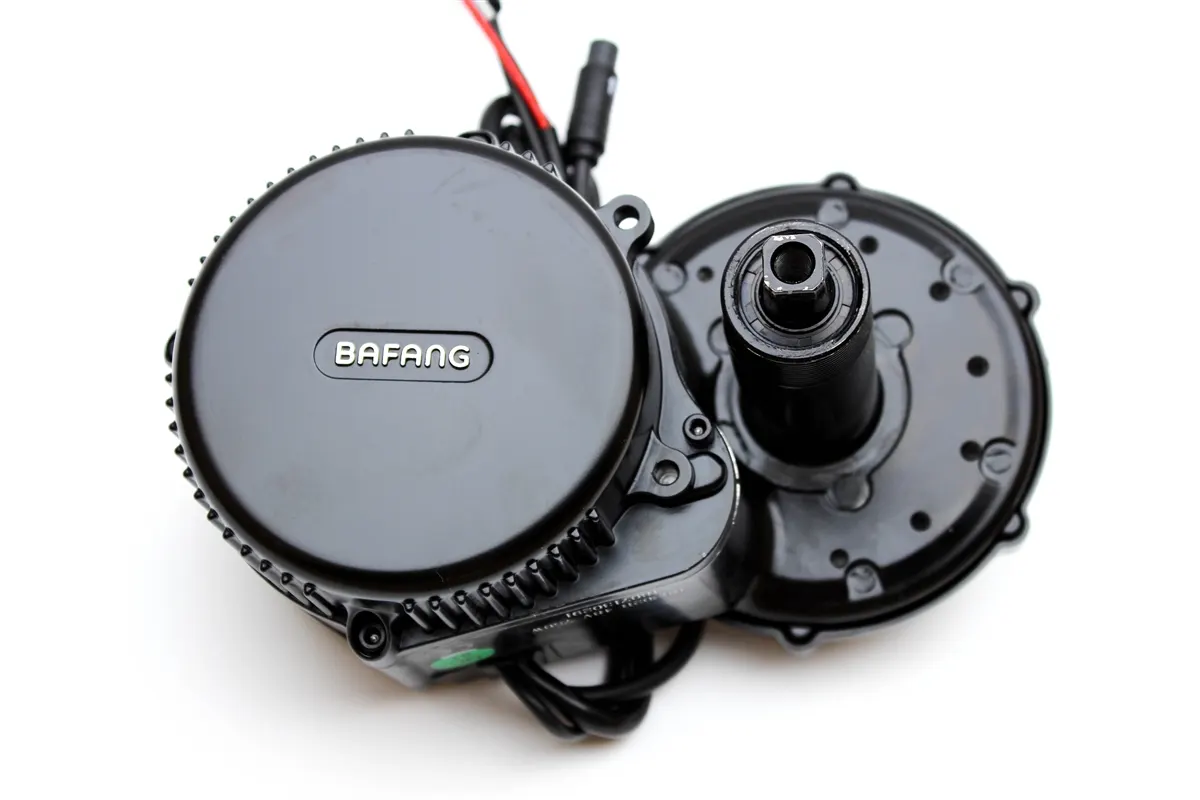
The Bafang BBS02B is the kit most people on e-bike forums started with. It replaces your bottom bracket and cranks with a 48V, 750W motor, so the power goes through your chain and your gears. That makes it strong on steep climbs, because you can shift down just like on a normal bike.
Installation isn’t as easy as some of the clip-on kits further down. You need to pull the cranks and bottom bracket, and it fits 68–73 mm bottom brackets only. Bafang kit sellers on Amazon also warn that it’s not meant for carbon frames or bikes with coaster brakes. But once it’s on, it’s hard to go back to plain pedaling.
The con: the pedal assist reacts to how fast you pedal, not how hard you push, according to this Bafang vs. Tongsheng vs. CYC comparison. It can feel like an on/off switch compared to a torque sensor. And the motor alone weighs about 8.5 lbs, per Electric Bike Review.
Who it’s for: home mechanics who want lots of power for the money and don’t mind a less natural feel.
Key facts: 48V · 750W · mid-drive · fits 68–73 mm bottom brackets · battery sold separately in this kit
CYC Photon 2 – the best mid-drive if you want it to feel like a real e-bike
CYC Motor from Hong Kong makes mid-drive kits for people who find the Bafang too crude. The Photon 2 is the lighter, road-friendlier model in the range. On paper it’s rated at 750W nominal (2000W peak) with 135 Nm of peak torque, and it has a torque sensor, so the motor adds power based on how hard you actually push the pedals.
It also fits more bikes than most mid-drives. CYC lists bottom bracket options from 68 to 120 mm, plus a press-fit version, and chainrings from 32T to 50T. You get a 2.1-inch color display and a Bluetooth app to tweak the settings.
The con: CYC sells mostly direct from its own shop, and its return policy is strict because every kit is configured to order. Returns come with a restocking fee, so measure your bike carefully before you buy.
Who it’s for: riders who want the natural feel of a factory e-bike on the frame they already own.
Key facts: 750W nominal · 135 Nm peak · torque sensor · 36V–72V batteries · 68–120 mm bottom brackets
Tongsheng TSDZ2B – the best-value torque sensor kit
The Tongsheng TSDZ2B is a mid-drive with a built-in torque sensor at a price closer to the Bafang. Cycling Weekly’s tester picked it as the best mid-drive in their 2026 test, mainly because it’s light for its power (80 Nm of torque) and leaves more ground clearance than bulkier motors.
The “B” version has two clutches, so the motor disconnects when you pedal without assist and the bike doesn’t feel like it’s dragging an anchor. The Amazon kit below is the 48V 500W version with the small VLCD5 display. In Europe you’ll want the 250W version instead (more on that in the legal section).
The con: it fits 68–73 mm bottom brackets only, Cycling Weekly says to stick to alloy frames, and you have to buy the battery separately. Budget for a good one.
Who it’s for: commuters who want a natural pedal feel without paying CYC money.
Key facts: 48V · 500W · torque sensor · 80 Nm · fits 68–73 mm bottom brackets · no battery included
Lightest by Bikee Bike – the lightest mid-drive you can buy
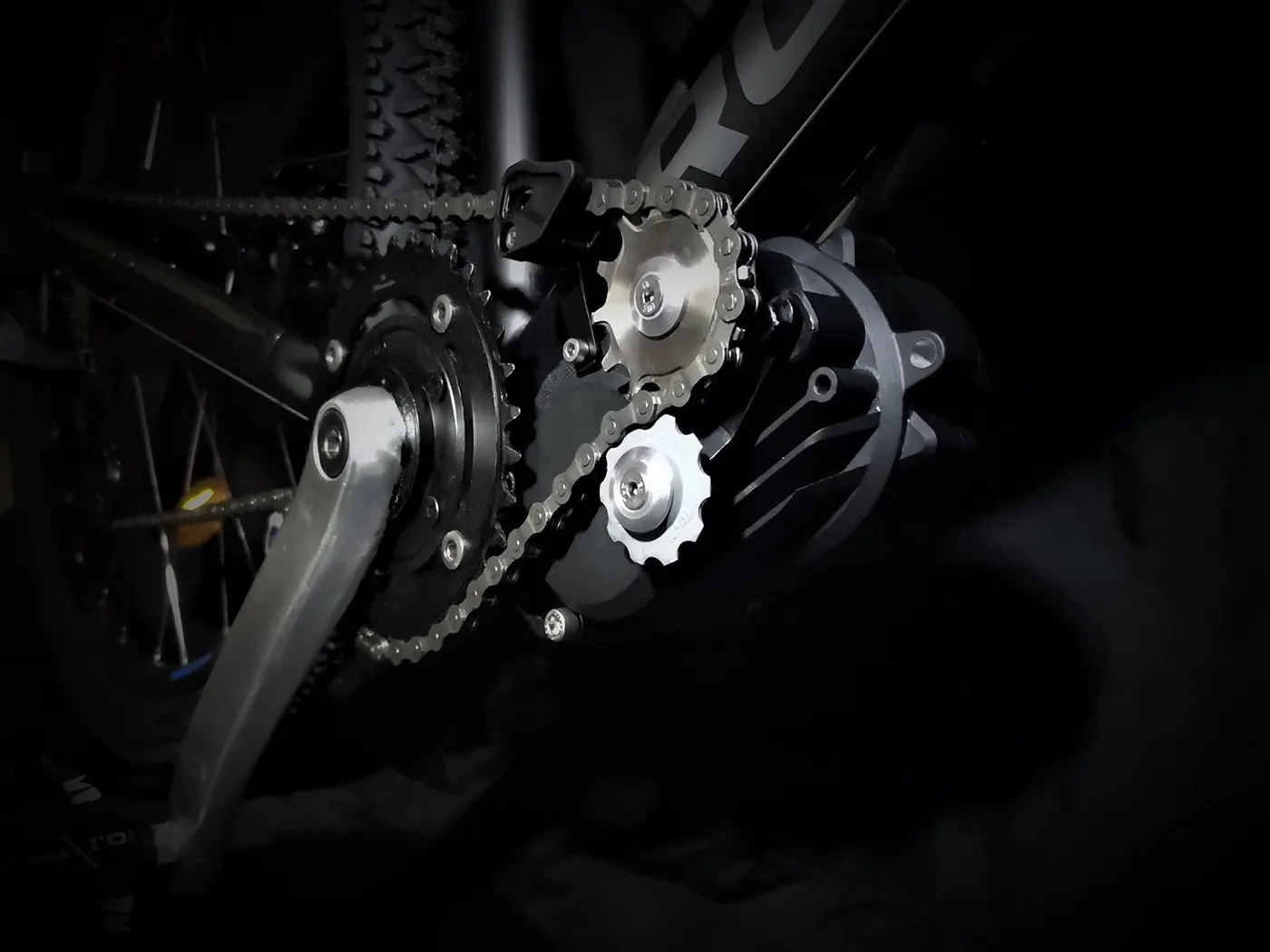
When I first wrote about the Lightest in 2020, it was an Indiegogo campaign from Bikee Bike in Italy. It shipped, and it’s still going: Bikee Bike now sells it directly from its own site, designed and assembled in Mantova.
The motor weighs 1.75 kg and Bikee Bike claims up to 120 Nm of torque, with a torque sensor on the chain tensioner. It runs next to your own chainring instead of replacing it. You pick a battery from 220 Wh to 960 Wh depending on how far you ride. Bikee Bike says the first install takes one to two hours at home, and after that the motor comes off with three bolts in about five minutes.
The con: it’s a small European company, so shipping and support run from Italy. Also check that your frame has room for the extra sprocket before you order.
Who it’s for: road and gravel riders who hate adding weight, and anyone who wants to switch the motor between bikes.
Key facts: 1.75 kg motor · up to 120 Nm (claimed) · torque sensor · 220–960 Wh batteries · 2-year warranty
Skarper DiskDrive – a clip-on motor for disc brake bikes
Skarper is the odd one out. Instead of a motor in the wheel or at the cranks, you swap your rear brake rotor for Skarper’s DiskDrive rotor, and a motor unit clicks onto the rotor and chainstay. No tools needed after the first install, so your road bike is only an e-bike on the days you want it to be. It was co-developed with Red Bull Advanced Technologies and track cyclist Chris Hoy is an ambassador.
Skarper claims 76 Nm. Cycling Weekly rode it up steep hills in a downpour and found the turbo mode “very strong”, with little drop-off near the assist cut-off.
The con: price. Cycling Weekly calls it far more expensive than the other kits in its guide, and Skarper sells in pounds from the UK. It also only works on bikes with disc brakes.
Who it’s for: road, gravel and touring riders with disc brakes who want a removable boost for the hilly days.
Key facts: 76 Nm (claimed) · clips on and off · needs a disc brake · removable
LIVALL PikaBoost 2 – the easiest kit to install
The PikaBoost 2 is a motor and battery in one box that clamps to your seat post and pushes a roller against your rear tire. No new wheel, no cables to your handlebars. That’s about as close to “plug and play” as e-bike conversion gets. LIVALL says it fits 14–29 inch bikes with a round seat post of 25–35 mm.
There are two battery sizes. The Amazon listing claims up to 70 km (43 miles) of range for the 220 Wh model and up to 50 km for the 158 Wh model, with 500W peak power. There’s a tilt sensor that stops the motor if the bike leans past 30 degrees.
The con: friction drives and wet tires don’t love each other. Electroheads mentions slippage in the rain. The listing also quotes up to 32 km/h, which is above the EU limit, so check the settings for where you ride.
Who it’s for: people who don’t want to touch their drivetrain, and riders of folding bikes.
Key facts: 158 or 220 Wh built-in battery · 500W peak · about 3 kg (per Electroheads) · app control
Voilamart Rear Wheel Kit – the cheapest way to go electric
Voilamart’s kit is a complete 26-inch rear wheel with a hub motor built in, plus a controller, pedal sensor, throttle, brake levers and an LCD display. Swap your rear wheel, run the cables, add a battery, done. Cycling Weekly tested it as its budget pick and liked the low price, the power and the easy-to-read display.
The listing says the motor is 48V 1000W but limited to 750W and 24 mph out of the box. It fits frames with 135 mm rear dropouts and comes with a 7-speed sprocket.
The con: Cycling Weekly found some parts “a bit cheap”, the kit isn’t waterproof, you have to remove the crank to fit the pedal sensor, and there’s no battery included. The 24 mph default is also above the 20 mph line in U.S. federal law, so turn it down if you want to stay a “bicycle”.
Who it’s for: tinkerers on a tight budget with a 26-inch bike they don’t mind experimenting on.
Key facts: 48V · 1000W (limited to 750W) · 26-inch rear wheel · 135 mm dropouts · battery not included
Bafang BBSHD – maximum power for private trails
The BBSHD is the BBS02B’s big brother: 1000W, and Amazon sellers list up to 160 Nm of torque. There are versions for 68–73 mm bottom brackets and for the 100 mm and 120 mm shells you’ll find on fat bikes. That makes it a common pick for fat bike and cargo bike builds.
The con: 1000W is over the 750W limit in the U.S. federal definition of an electric bicycle and far over the 250W EU limit. In most places this is an off-road or private land kit. Like its little brother, it also uses a cadence sensor rather than a torque sensor.
Who it’s for: fat bike and trail riders who ride on private land, and cargo bike builders who can program it down to a legal setting.
Key facts: 48V/52V · 1000W · mid-drive · fits 68–120 mm bottom brackets · battery optional
A note on batteries and the law
This is the boring part, but it’s the part that keeps your house from burning down.
Batteries. The battery is the most dangerous part of any ebike conversion kit. Lithium-ion packs store a lot of energy, and a cheap uncertified one is a gamble you take every night you charge it. Buy the battery from the kit maker or a known brand, look for UL 2271 certification (for batteries) or UL 2849 (for the full e-bike system), and use the charger that came with it. New York City takes this seriously enough that Local Law 39 bans the sale of uncertified e-bike batteries in the city. Charge where you can see it, not overnight next to the front door, and don’t keep using a pack that’s swollen, dented or got soaked.
The law. In the U.S., federal law defines a “low-speed electric bicycle” as one with working pedals, a motor under 750W and a motor-only top speed under 20 mph. States add their own class rules (Class 1, 2 and 3) and some trails only allow Class 1. In the EU and UK the limits are much stricter: 250W continuous and assist that cuts out at 25 km/h. Go over that and your “bike” becomes a moped in the eyes of the law, with insurance and license plates to match. Many kits above are sold in several power versions, so pick the one that’s legal where you live, and remember that a home-built e-bike may not be covered by your bike insurance.
How to choose an ebike conversion kit
- Mid-drive, hub or clip-on? A mid-drive (Bafang, CYC, Tongsheng, Lightest) uses your gears and climbs best. A hub motor wheel (Voilamart) is cheap and simple. A clip-on (Skarper, PikaBoost) is the easiest and removable, but has less power.
- Torque sensor or cadence sensor? Torque sensors feel like stronger legs. Cadence sensors feel more like a scooter with pedals. Try both if you can.
- Measure first. Check your bottom bracket width, dropout spacing, wheel size and brake type before you order anything. Most returns start with a tape measure nobody used.
- Frame material. Aluminum and steel frames are the safe choice. Most makers say no to carbon.
- Budget for the battery. Several kits come without one, and a decent battery can cost as much as the motor.
FAQ
Is an ebike conversion kit cheaper than buying an e-bike?
Usually, yes, if you already have a good bike. A budget hub kit plus a battery costs far less than a new e-bike. The premium kits (CYC, Skarper) get close to the price of an entry-level e-bike, so they only make sense if you love your current bike.
Can I install a conversion kit myself?
The clip-on kits and hub wheels are doable for most people with basic tools. Mid-drives need a crank puller and a bottom bracket tool. If you’re not sure, a local bike shop can install it, and that’s money well spent.
Will a conversion kit damage my bike?
A mid-drive puts more stress on your chain and cassette, so expect to replace them more often. Too much power on a light frame can also be risky, which is why most makers rule out carbon frames.
A motor doesn’t stop you from getting thirsty, so if the battery left your bottle cage free, the Air Up scent bottle is a fun thing to put in it. And if you want to see how far the motor really took you, a cheap tracker like the Xiaomi Smart Band 9 logs your rides.