Loog Guitar Review (2026) – Which Loog Should Your Kid Get?
As an Amazon Associate I earn from qualifying purchases. It costs you nothing extra.
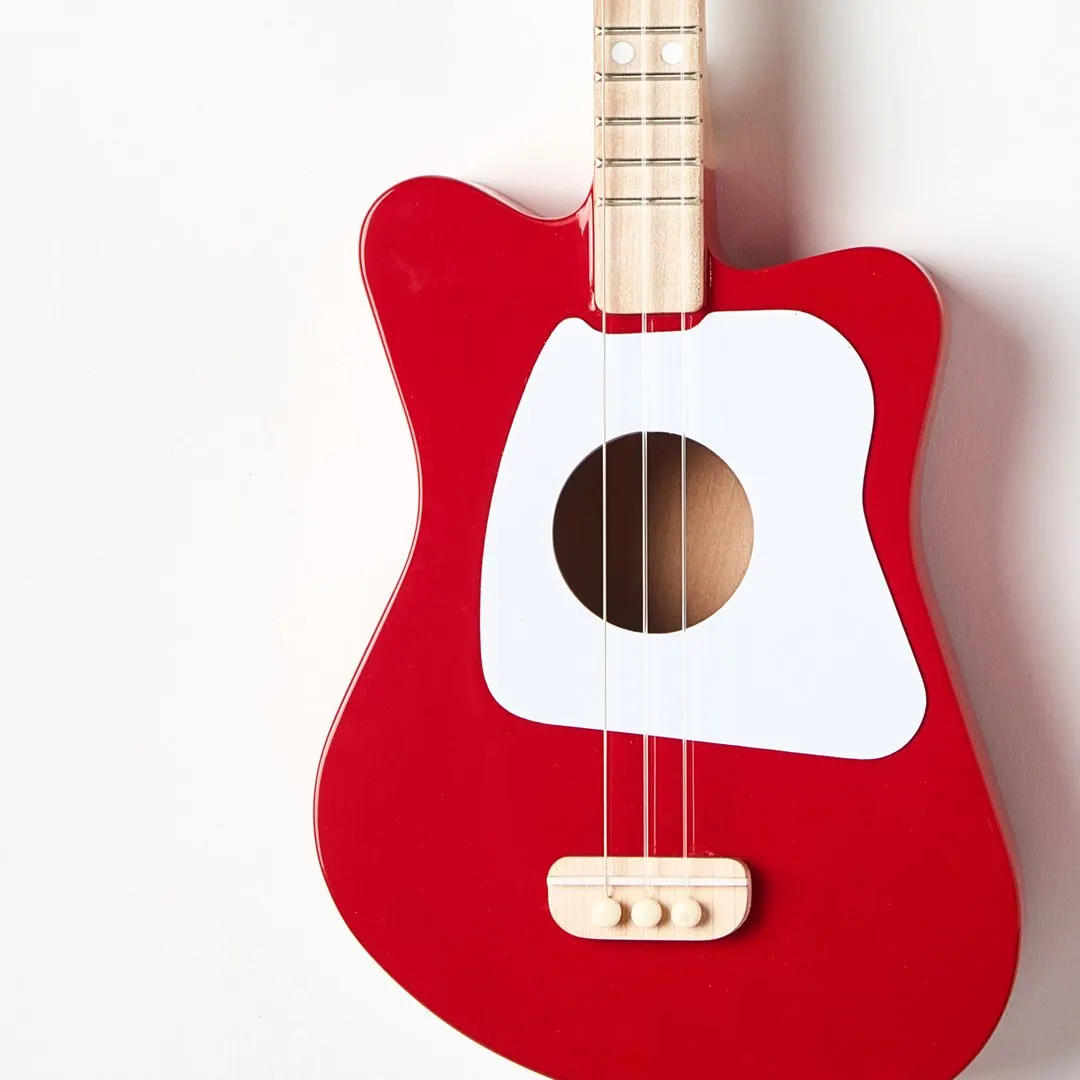
Buying a first guitar for a small kid is weird. The toy-store guitars are plastic and go out of tune before you get them home. A real guitar is as big as the kid. A Loog guitar sits in between: a real wooden guitar, shrunk to kid size, with only three strings.
This Loog guitar review covers the whole current lineup, because “a Loog” is now six different guitars from 119 to 249 bucks (October 2026). Short version: for most kids under 6, the Loog Mini Acoustic is the one to get. Older kids should look at the Pro or the six-string Pro 6, or skip Loog and buy a 3/4-size guitar.
Quick picks:
- Best first guitar for ages 3 to 5: Loog Mini Acoustic
- Best for a kid who wants to be loud: Loog Mini Electric
- Best for ages 6 to 8: Loog Pro Acoustic
- Best Loog for 9+ (and adults who want a small guitar): Loog Pro 6 Acoustic
- Best non-Loog alternative: Yamaha JR1
What is a Loog guitar?
A Loog is a small guitar built for kids. The Mini and Pro have three strings, tuned like the three thinnest strings of a normal guitar (G, B and E). So every chord shape a kid learns on a Loog still works when they move to a six-string later. That’s the clever part, and it’s the big difference from a ukulele.
Every Loog comes with chord flashcards, picks and a code for the Loog Guitar app. The bodies are wood (basswood on the acoustics, paulownia on the electrics) with maple necks.
Loog was started by Rafael Atijas from Uruguay, who played in a band there. It began in 2010 as his master’s thesis at NYU, and the first guitars were funded on Kickstarter in 2011. A 2019 Kickstarter raised more than half a million dollars, and Loog now makes licensed versions with Fender and Gibson too.
Loog Guitars Compared
Prices are from Loog’s US store (October 2026). Ages are Loog’s own recommendation.
| Model | Ages | Strings | Scale | Length | Weight | Price |
|---|---|---|---|---|---|---|
| Loog Mini Acoustic | 3+ | 3, nylon | 15.6″ | 22.2″ | 0.9 lb | $119 |
| Loog Mini Electric | 3+ | 3, steel | 15.6″ | 22.1″ | 1.9 lb | $189 |
| Loog Pro Acoustic | 6+ | 3, nylon | 20.4″ | 29.2″ | 2.0 lb | $149 |
| Loog Pro Electric | 6+ | 3, steel | 20.4″ | 29.2″ | 2.4 lb | $209 |
| Loog Pro 6 Acoustic | 9+ | 6, nylon | 22.8″ | 33.4″ | 4.0 lb | $169 |
| Loog Pro 6 Electric | 9+ | 6, steel | 22.9″ | 33.9″ | 4.4 lb | $249 |
| Yamaha JR1 (not a Loog) | no age given | 6, steel | 21.25″ | 33.25″ | n/a | about $160–$190 |
Loog Mini Acoustic – the Best Loog for Small Kids
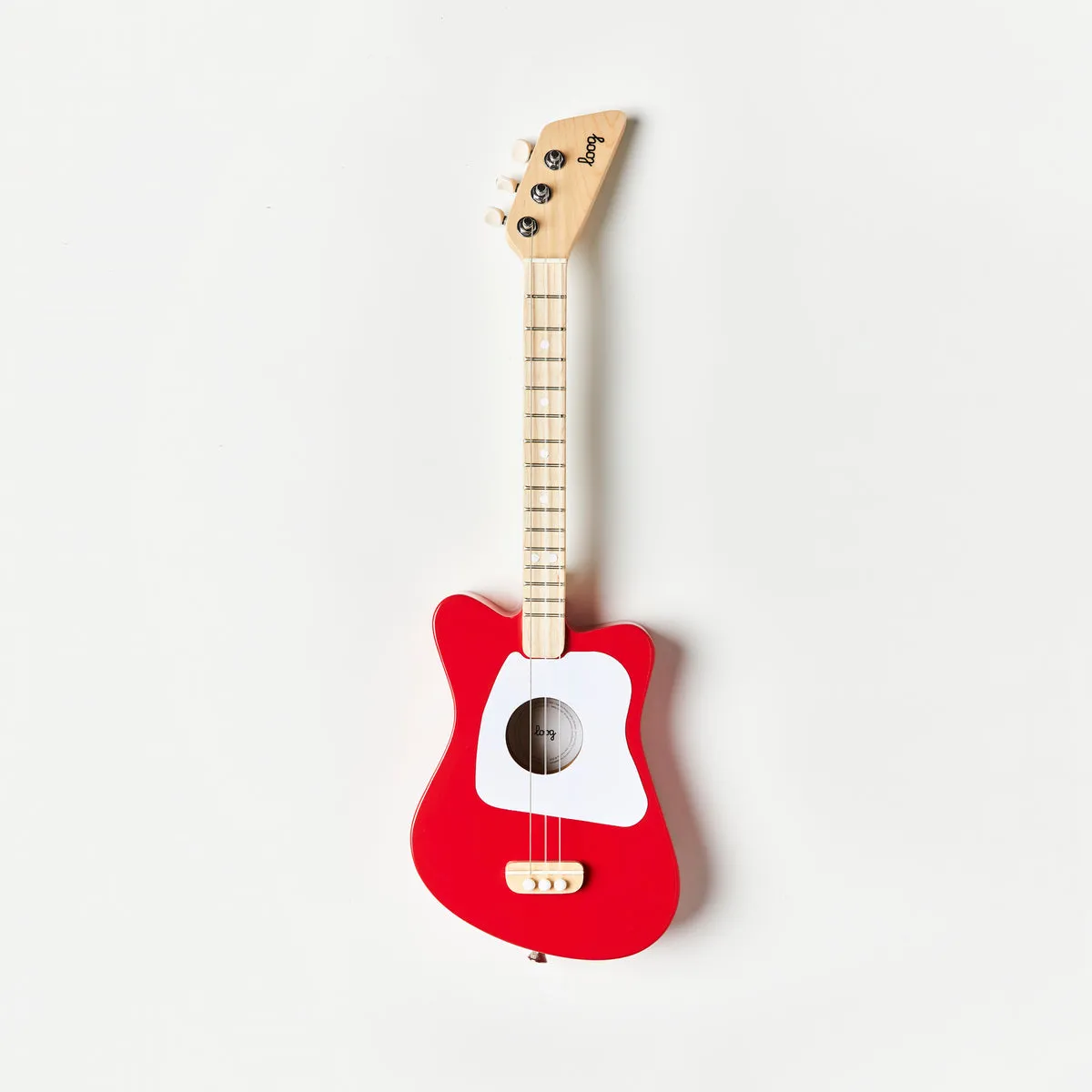
The Loog Mini Acoustic is the original kids’ Loog, and still the one I’d point most parents to. It’s a real wooden guitar (basswood body, maple neck) with three nylon strings, 15 frets and a 15.6-inch scale. It weighs 0.9 lb, so a three-year-old can hold it without the whole thing tipping over.
It looks fun and friendly, but don’t be fooled: it’s a proper little instrument, and anyone who already plays guitar can get a mean solo out of it. Fatherly liked the slim neck for small hands, and that it arrives ready to play.
- Body: basswood
- Neck and fingerboard: maple (the Natural version has a rosewood fingerboard)
- Strings: 3, nylon
- Frets: 15
- Scale: 15.6″ (390 mm)
- Length: 22.2″ (565 mm)
- Weight: 0.9 lb (0.4 kg)
- Colors: red, black, green, white, yellow, pink and natural
What’s less great: Acoustic Guitar magazine found slightly sharp fret edges and not much volume or sustain. On Reddit, some parents also complain that the nylon strings won’t hold their tuning. And it’s not cheap for a kids’ guitar: 119 bucks, or 129 for the natural wood version (October 2026). Loog also sells a left-handed Mini for the same price.
Get it for kids from about 3 to 6 who want to play “a real guitar like Dad’s” and won’t settle for plastic.
Loog Mini Electric – the Loud One
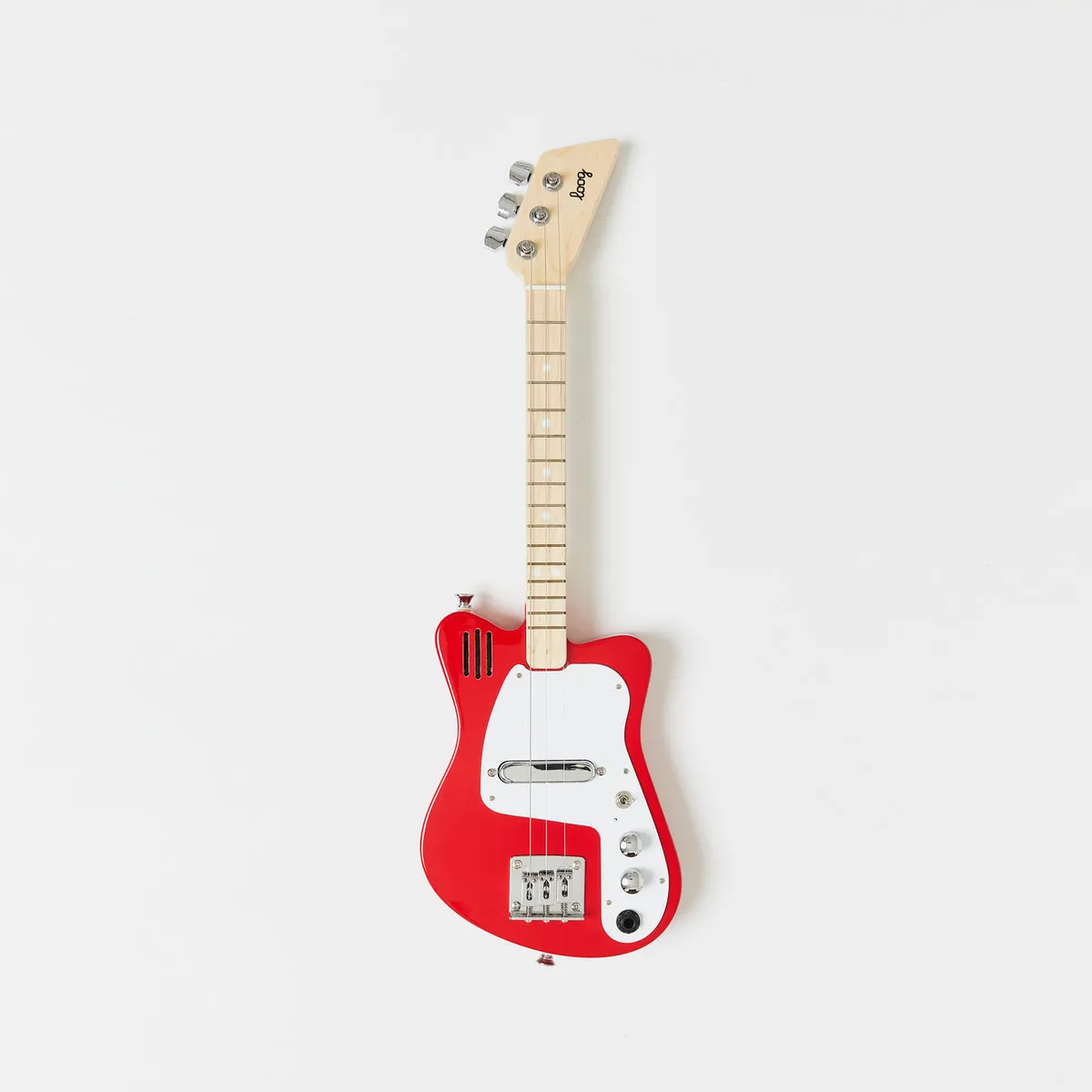
The Loog Mini Electric is the same size as the Mini Acoustic, but with steel strings, a pickup and an amp and speaker built into the body. There are volume and gain knobs, so your four-year-old gets distortion. You’ve been warned.
You don’t need a separate amp, which is the big selling point: no cables, no extra box. It comes in six colors plus two Sparkle versions.
The downside: it weighs 1.9 lb, twice the acoustic, and TTPM’s reviewer found it a bit heavy for small children. When we first wrote this review, buyer reviews of the electric also mentioned buzzing strings and loose tuners. It’s 189 bucks (199 for Sparkle) at the time of writing.
Who it’s for: kids who mainly want to rock out, and parents with good earplugs.
Loog Pro Acoustic – the Next Size Up for Ages 6+
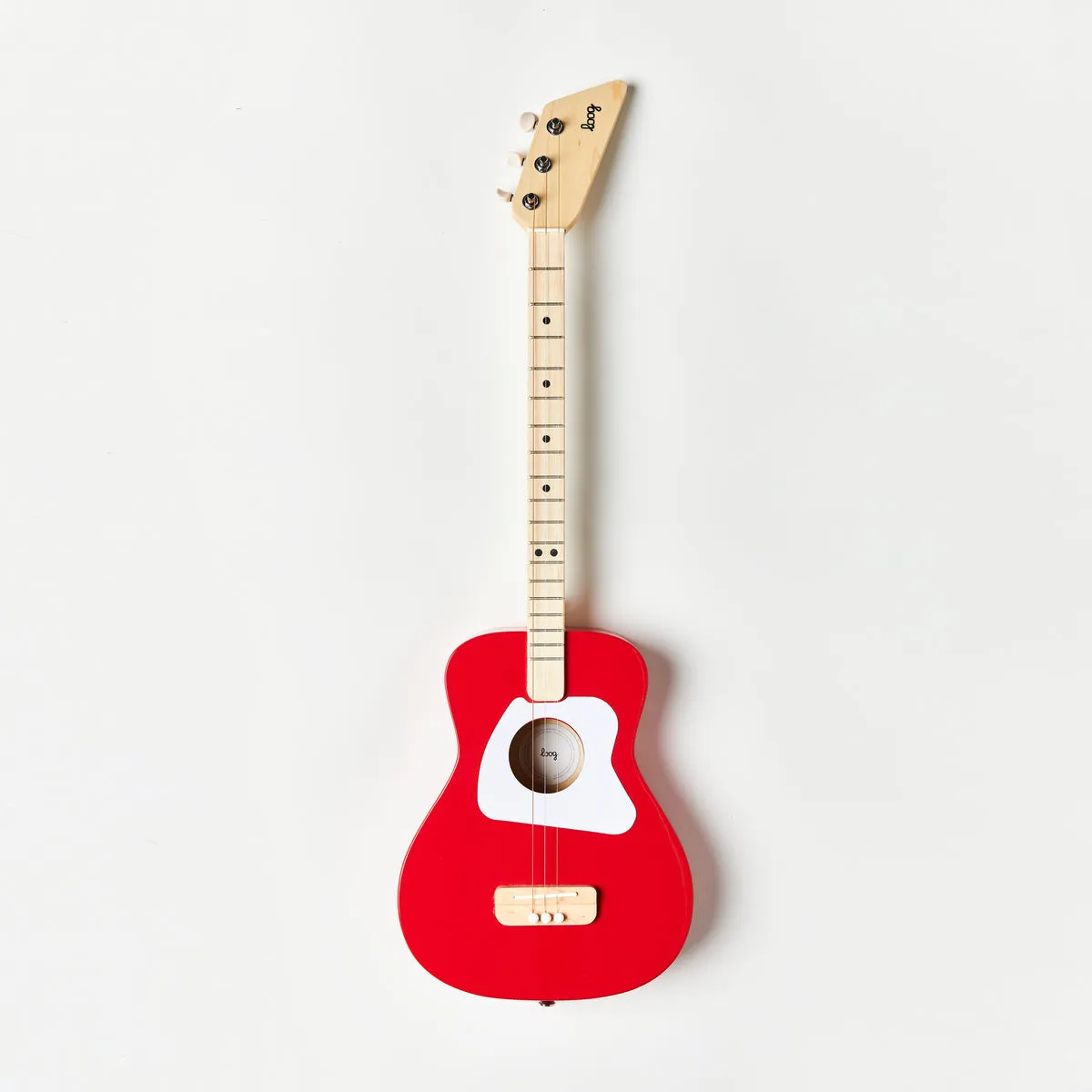
The Loog Pro Acoustic is still a three-string guitar, but bigger: a 20.4-inch scale, 18 frets and 29.2 inches long. Loog recommends it for ages 6 and up (older reviews say 7+ or 8+). The extra size gives it a fuller sound than the Mini.
The catch is the same as with every three-string guitar: it’s a stepping stone. Guitareuroshop’s review says it’s still far from a 3/4-size guitar, and a growing kid may outgrow it in about a year. It’s 149 bucks (159 for natural wood).
Good for kids from 6 to 8 who are starting from zero. If your kid is 8 and already serious, jump straight to a six-string.
Loog Pro Electric – a Real Electric for Small Hands
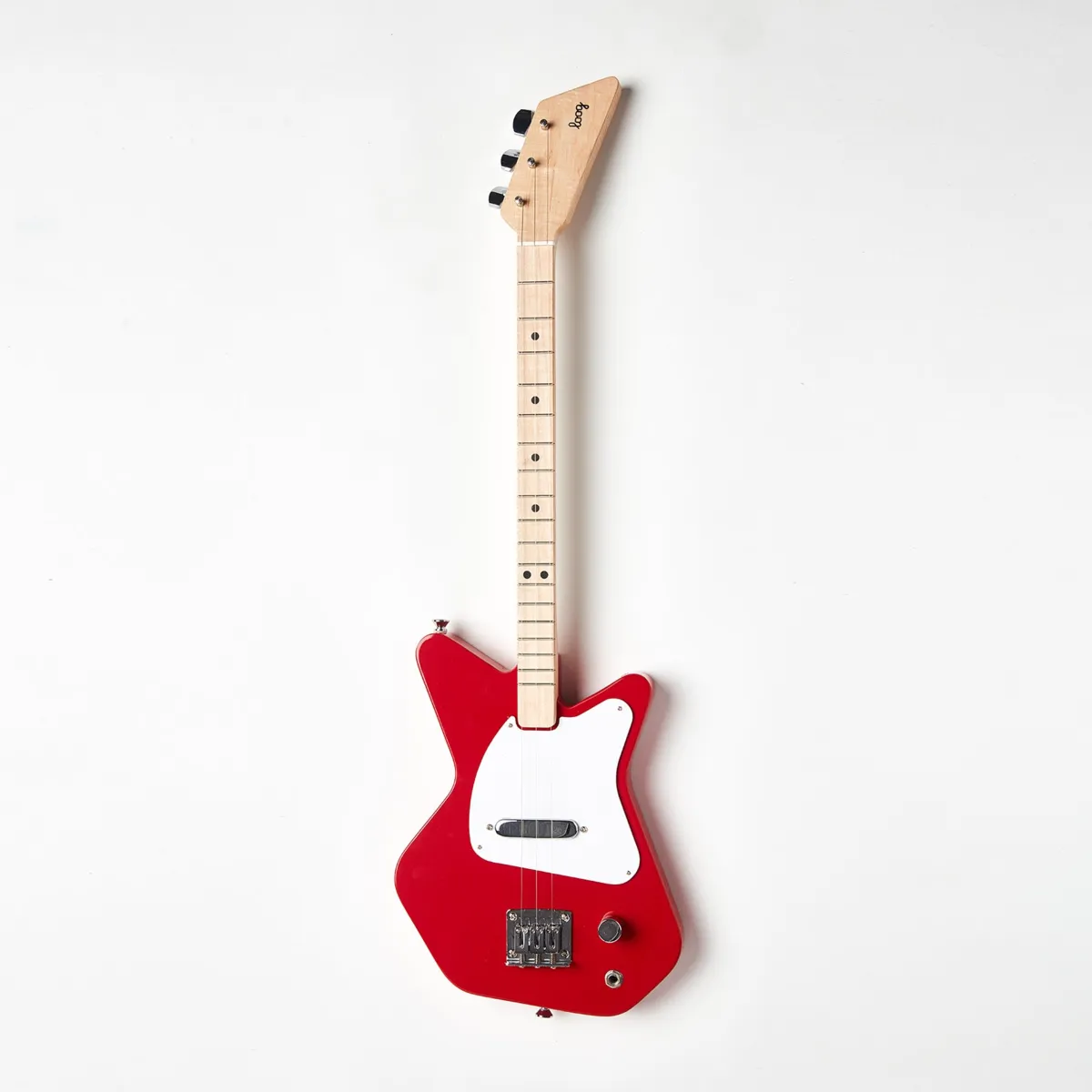
The Loog Pro Electric is the Pro in electric form: same 20.4-inch scale, a paulownia body, steel strings and a pickup. Unlike the Mini Electric, it has no amp inside. Loog’s page says “Amp sold separately”, so add one to the budget. Loog’s own Mini Amp Pro (5 watts, Bluetooth, rechargeable) is 119 bucks.
The Next Web liked the guitar a lot, but found the app weak: it showed chord names without fingering charts or strum patterns. The Pro Electric is 209 bucks (October 2026). The licensed Fender x Loog and Gibson x Loog guitars (Strat, Tele, SG and Les Paul shapes) are also three-string electrics, at 229 bucks each.
Buy it for kids of 6 and up who already know they want an electric, if you don’t mind buying an amp too.
Loog Pro 6 Acoustic – Six Strings for Ages 9+
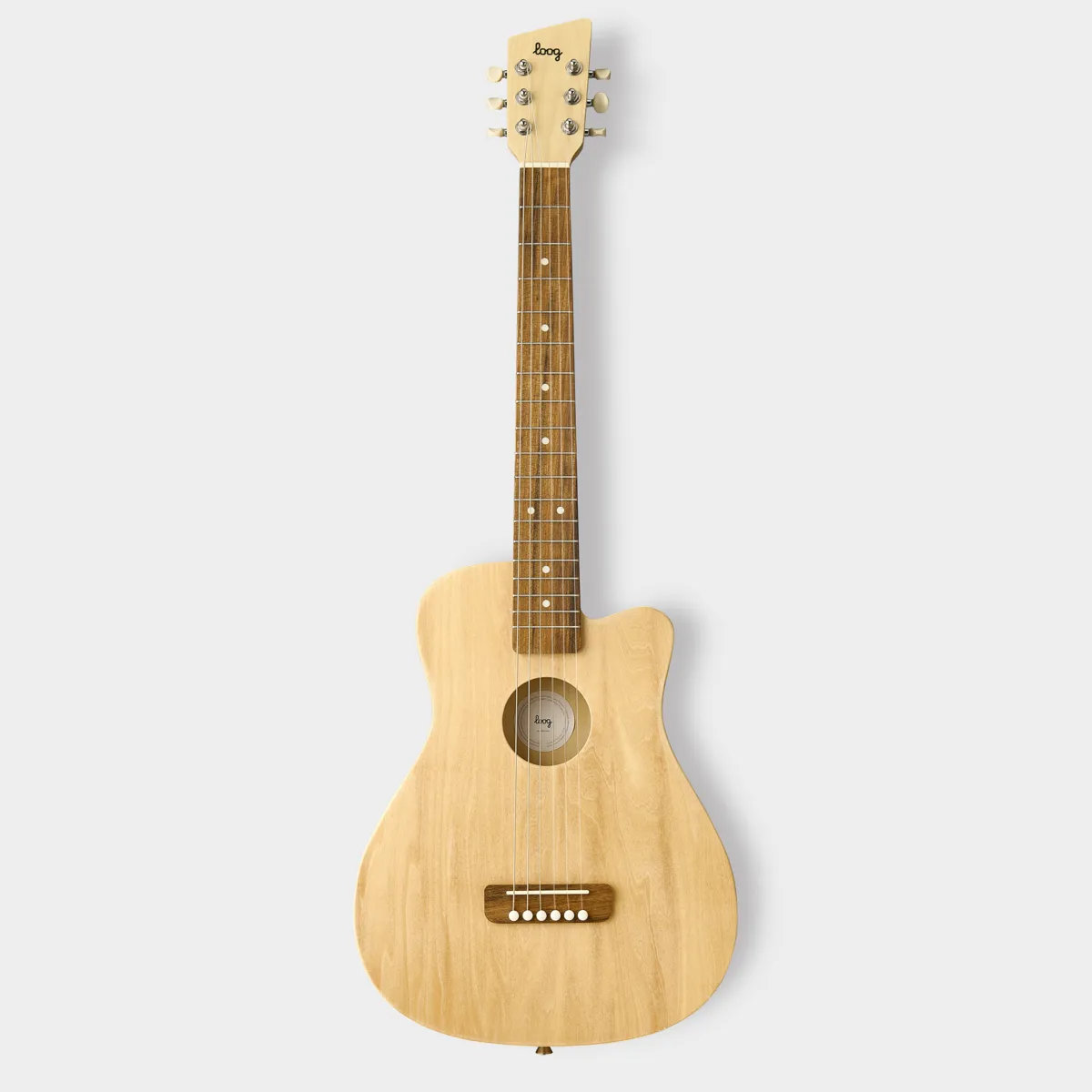
The Loog Pro 6 Acoustic is Loog’s answer to “my kid outgrew the three strings.” It’s a full six-string guitar with nylon strings, a cutaway body and a 22.8-inch scale, for ages 9 and up. The new cutaway version replaced the older Pro VI Acoustic. It’s 169 bucks, which is less than most parents expect for a Loog.
Nylon strings are softer on fingertips than steel, which helps the first painful weeks. On the other hand, at 4.0 lb it’s the heaviest acoustic Loog, and I couldn’t find an independent review of the new model yet.
Pick it for kids from 9 up who are ready for six strings and like the Loog look.
Loog Pro 6 Electric – the Grown-Up Loog
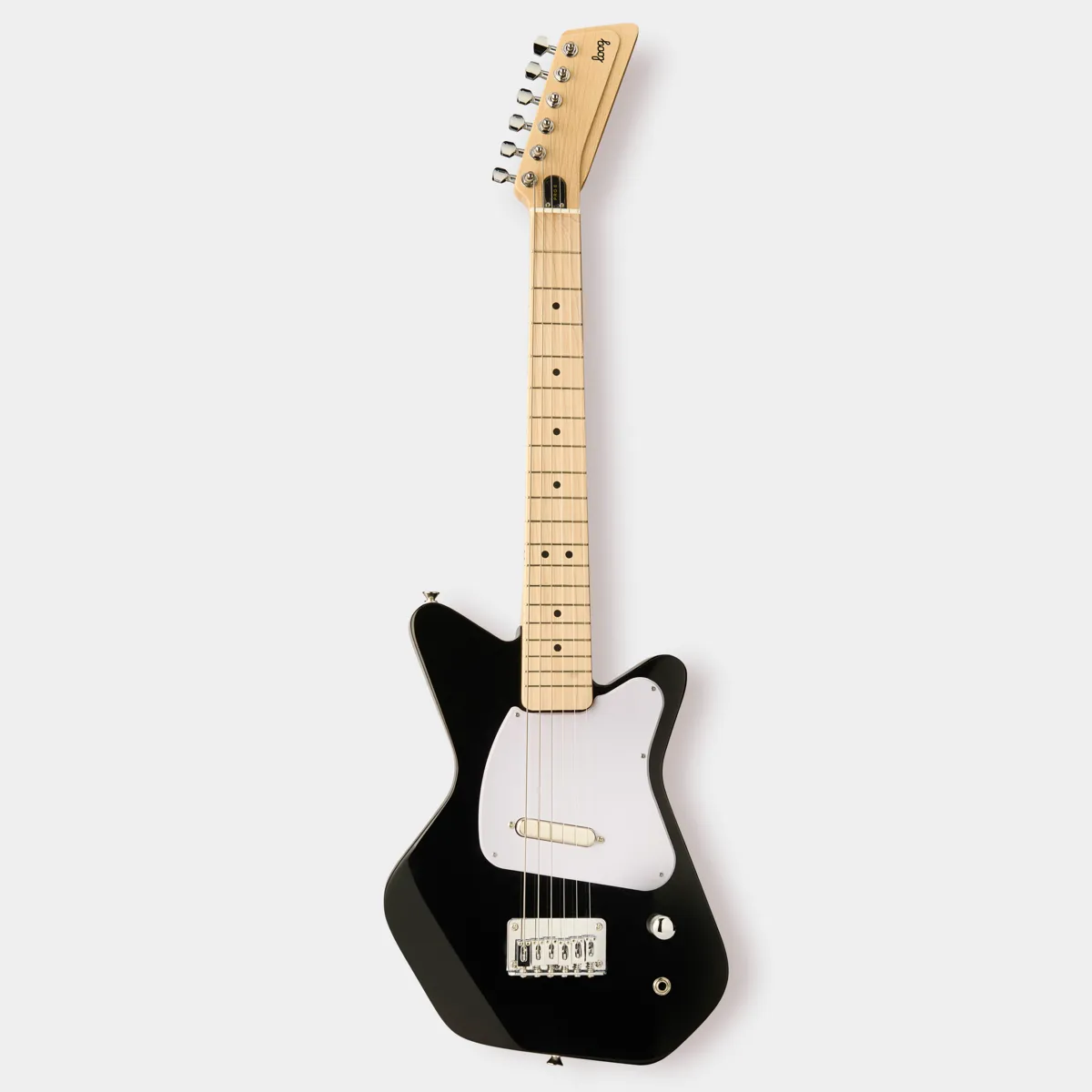
The Loog Pro 6 Electric is a six-string electric with a 22.9-inch scale and 19 frets, in black, red or green. It’s the most expensive Loog at 249 bucks (October 2026). Loog still sells off the older 2024 model at 209 bucks, marked as discontinued, and Amazon had that older Pro VI Electric for 199. The new one is only in Loog’s own shop for now.
The problem is the price. For the same money you can get a 3/4-size six-string from a big brand, and Loog’s page doesn’t list an amp in the box. There’s no independent review of this model yet either.
It makes sense for older kids who want a small electric that matches their old Loog, or for adults who want a tiny couch guitar.
See the Pro 6 Electric at Loog
The Loog App and Flashcards
Every Loog comes with chord flashcards that show each chord on the Loog and how the same shape grows into a six-string chord. That’s the part I like most about the system: the cards keep working after the Loog goes in the closet.
The Loog Guitar app has a free tuner. The rest sits behind a “Backstage Pass”: video lessons, a game mode, a songbook of more than 100 songs and an interactive TV show. The pass is $9.99 a month, $59 a year or $99 for life (October 2026), and it also covers Loog’s Piano app. Reviewers have been mixed on the app. The Next Web found it frustrating for a real beginner.
How to Tune a Loog Guitar
Tuning is the question people search most after the price. A three-string Loog is tuned G, B, E, from the thickest string to the thinnest. Those are the same notes as strings 3, 2 and 1 on a normal guitar.
- Open the free tuner in the Loog app, or clip on any guitar tuner.
- Pluck the thickest string and turn its peg until the tuner shows G.
- Do the same for the middle string (B) and the thinnest string (E).
New nylon strings stretch, so expect to retune often in the first weeks. The six-string Pro 6 uses standard tuning: E, A, D, G, B, E.
Loog Mini vs Loog Pro vs Other Kids’ Guitars
The short rule: pick by age and hand size first, then by acoustic or electric.
- Ages 3 to 5: Loog Mini. Nothing else in this list is small enough.
- Ages 6 to 8: Loog Pro, or a ukulele if your kid mainly wants to sing along.
- Ages 9 and up: a six-string. That’s the Loog Pro 6 or a 3/4-size guitar like the Yamaha JR1.
Here are the two alternatives that make the most sense.
Yamaha JR1 – the Classic 3/4-Size Guitar
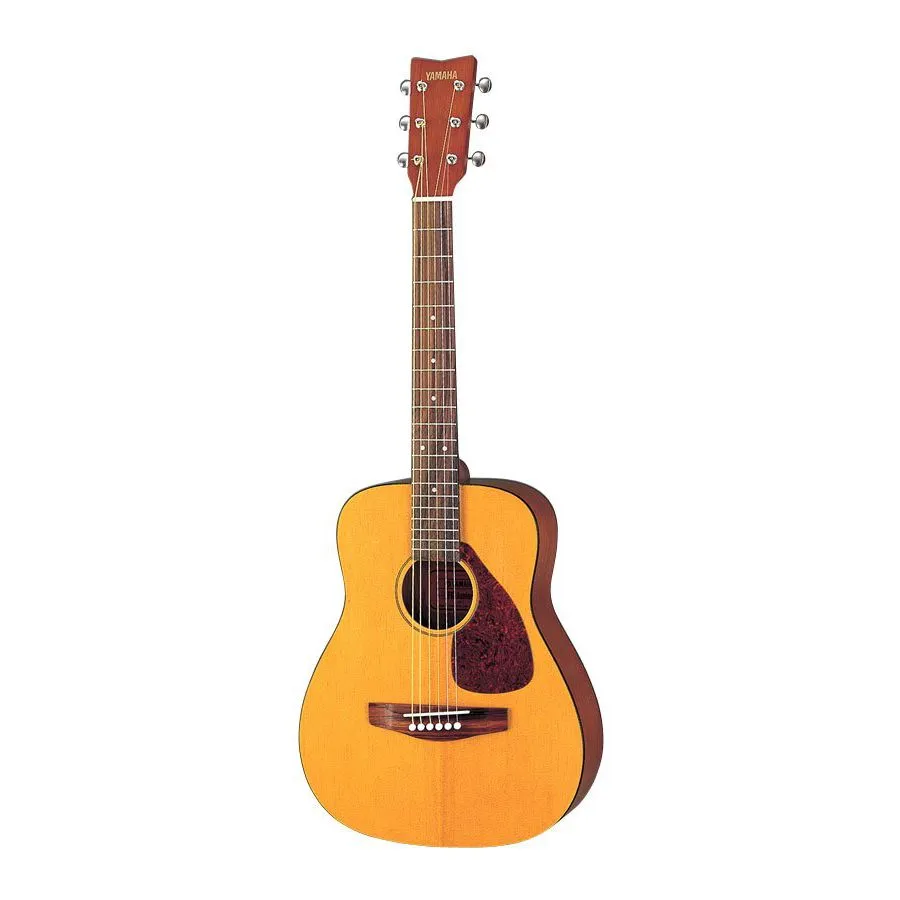
The Yamaha JR1 is the boring, sensible choice, and I mean that as a compliment. It’s a 3/4-size six-string with a spruce top, a 21.25-inch scale and steel strings, and it comes with a gig bag. At 33.25 inches long, it’s about the same size as the Loog Pro 6.
On the down side, steel strings are harder on small fingertips than nylon, and there are no flashcards or app in the box. Yamaha doesn’t give an age range. It was about 160 to 190 bucks at US music stores and on Amazon (October 2026).
Choose it over a Loog when your kid is 8 or older and wants to learn “proper” guitar from a teacher.
Kala KA-15S – the Budget Ukulele
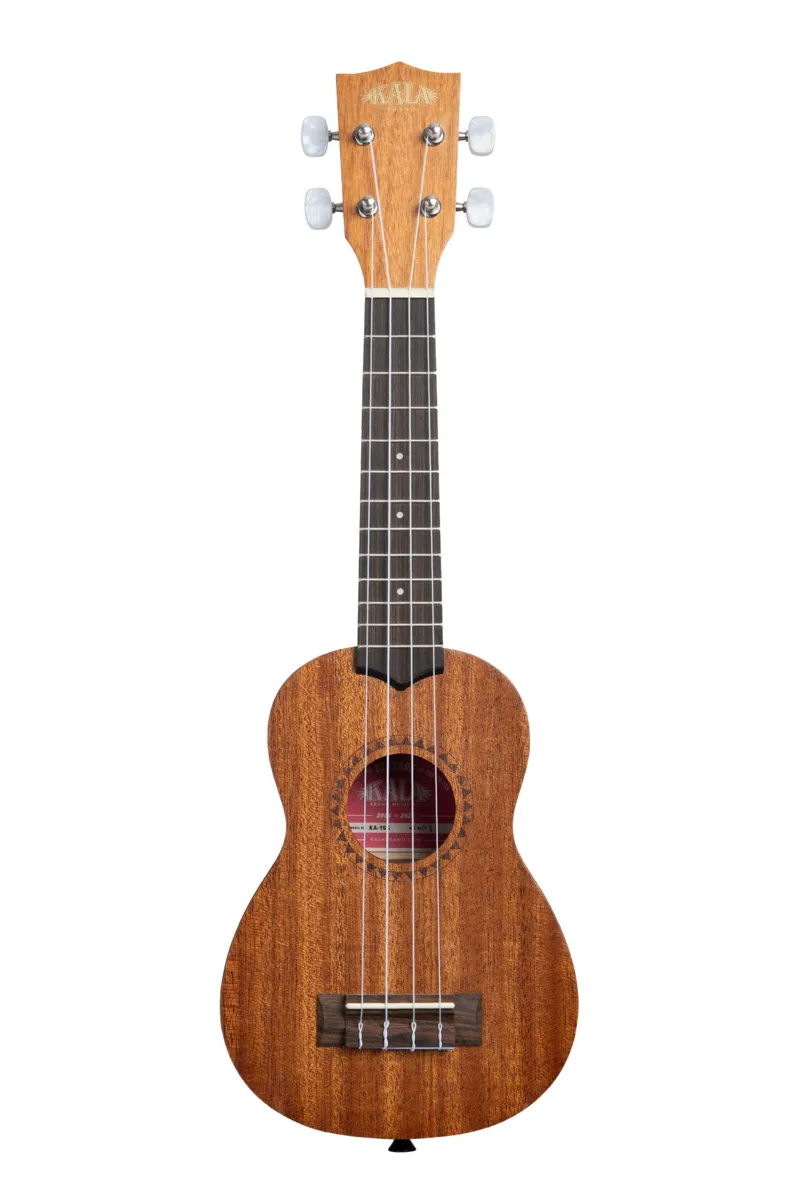
The Kala KA-15S is a soprano ukulele in mahogany, and at 69 bucks on Kala’s site (October 2026) it’s about half the price of a Loog Mini. It’s 21 inches long, so it’s just as easy for small kids to hold.
One thing to know: a ukulele is tuned a fourth higher than a guitar. The chord shapes carry over, but they have different names, so a kid who later moves to guitar has to relearn what everything is called. With a Loog, a G chord stays a G chord.
It’s a good pick for younger kids who want to strum and sing along, and for parents who want to test the waters cheaply.
Is a Loog Guitar Worth It?
The good. It’s real wood, it’s tuned like a real guitar, and it’s sized for kids from 3 up. Every chord a kid learns transfers to a six-string. The flashcards are clever, and the Mini is light enough for a toddler.
The not-so-good. Three strings is a limit, and your kid will outgrow it. Then you buy a second guitar. The acoustic has no built-in tuner, the app’s best parts cost extra, and a Loog costs more than most kids’ guitars. Reviewers also mention small build issues like sharp fret edges.
Who should buy a Loog? Parents of kids from about 3 to 8 who want a real instrument that doesn’t feel like a toy. If your kid is older and serious about guitar, skip the three-string Loogs and buy a six-string instead.
Where Can I Buy a Loog Guitar?
You can buy every model on loogguitars.com, and most of them on Amazon. Loog’s own store has the full color range, the bundles (guitar plus gig bag, strap and more) and the Fender and Gibson versions. It’s worth comparing both before you order, especially around the holidays.
FAQ
What age is a Loog guitar for?
Loog says the Mini is for ages 3 and up, the three-string Pro for 6 and up, and the six-string Pro 6 for 9 and up.
Are Loog guitars good for beginners?
Yes, that’s what they’re made for. Three strings make the first chords much easier, and the shapes work on a normal guitar later. The flashcards and app give a kid something to follow without a teacher.
Can adults play a Loog guitar?
Yes. The tuning is the same as a normal guitar, so an adult can play anything that fits on three strings. The Mini’s neck is tiny for adult fingers, though. For an adult, the Pro 6 makes more sense: at 33.4 inches long, it’s close to a 3/4-size guitar.
Where are Loog guitars made?
Loog is a company from Uruguay, where most of its team works. According to Forbes Argentina, the guitars themselves are manufactured in China.
Is a Loog better than a ukulele?
For a kid who wants to play guitar later, yes: a Loog uses guitar tuning, so nothing has to be relearned. For a kid who mainly wants to strum along to songs, a 69-buck ukulele does the job for less.
Do Loog guitars stay in tune?
The nylon strings on the acoustics stretch when they’re new, so they need retuning often at first. Use the free tuner in the Loog app.
Looking for more ways to get a kid making noise? The Blipblox After Dark is a synth built for kids, the Kirby Otamatone is the silliest instrument we know, and our list of the most fun music gadgets has more. For kids who’d rather build than strum, see our best coding toys for kids.